How to Choose a Hand Mixer
Recommended picks

Wattage: How Much Power Do You Actually Need?
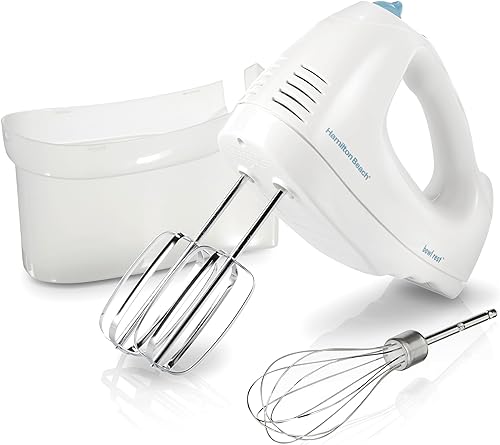
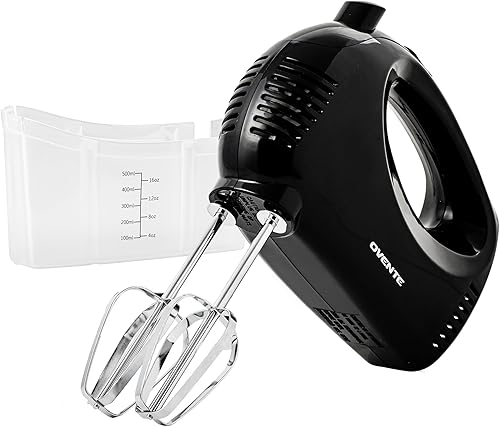
Wattage determines how much resistance a motor can push through before it bogs down or overheats. For light tasks like whipping cream or beating eggs, 120 to 150 watts is enough, and models like the Ovente HM151B (150W, rated 4.5 stars across 13,000 reviews at $14.99) handle those jobs well. If you regularly make cookie dough, cheesecake batter, or dense cake mixes, step up to 250 watts or more. The Hamilton Beach 62682G runs at 250 watts, carries a 4.5-star rating from over 66,000 buyers, and sells for $27.95, making it a strong pick for everyday bakers. Going above 300 watts starts to add weight and cost without a clear payoff for most home kitchens. Match wattage to your most demanding task, not your average one.
Speed Settings: More Is Not Always Better
Speed count matters less than the range between the lowest and highest setting. A 5-speed mixer that goes from a true slow stir to a fast whip is more useful than a 9-speed unit where half the settings feel identical. Most bakers do fine with 5 or 6 speeds. The Cuisinart HM-90BCS offers 9 speeds, weighs 4 pounds, and costs $79.90, which makes sense if you want fine control over delicate meringues or stiff frostings. For simpler baking, 6 speeds as on the Hamilton Beach 62682G covers every step without confusion. Look for a dedicated slow-start or fold setting if you bake with powdered ingredients regularly, since it keeps the counter clean.
Weight and Ergonomics: You Hold This Thing the Whole Time
Hand mixer weight ranges from under 1 pound to over 4 pounds, and you feel every ounce after a few minutes of mixing. The Ovente HM151B weighs 1.8 pounds and the Hamilton Beach 62682G comes in at 1.3 pounds, both easy to hold for extended sessions. Heavier mixers like the Cuisinart HM-90BCS at 4 pounds pack more motor but tire your wrist faster. Button placement also matters. Controls that fall under your thumb without shifting your grip make it easier to change speed mid-mix without stopping. If possible, check where the speed buttons sit before buying.
Attachments: Beaters, Whisks, and Dough Hooks
Nearly every hand mixer ships with a standard set of beaters, and that is enough for cakes, frostings, and batters. A balloon whisk attachment is worth having if you whip cream or egg whites more than occasionally, since the wire loops trap air faster than flat beaters. Dough hooks are useful for yeast doughs but are not a substitute for a stand mixer on stiff recipes. Check that the included attachments have a clean eject button rather than a manual pull. Stainless steel beaters outlast chrome-coated ones, especially when used with acidic batters.
Price Brackets and What You Give Up
Budget models under $20 like the Ovente HM151B (150W, 5 speeds, 1.8 lb) are reliable for occasional bakers and small households. The mid range from $25 to $45 buys more wattage, better build quality, and a higher speed ceiling without a big jump in price. The Hamilton Beach 62682G at $27.95 sits squarely in that range and holds a 4.5-star average from a very large sample of buyers. Above $60, you are mostly paying for brand name, a longer warranty, or specialty features like a storage case. Decide on your actual use frequency before moving to a premium tier.
When to Pick a Stand Mixer Instead
Hand mixers are designed for tasks that take under 10 minutes and use a bowl you already own. If you bake multiple batches in a row, mix bread dough by hand on a weekly basis, or want to walk away while the machine runs, a stand mixer is the right tool. Hand mixers offer portability and lower cost, but they require you to hold the machine throughout the process. For most people who bake a few times a month, a quality hand mixer handles 90 percent of recipes without the counter space or price commitment of a stand mixer.
Common mistakes to avoid
- Buying on wattage alone without checking actual weight, which leads to arm fatigue during long mixing sessions.
- Choosing the cheapest model for dense tasks like bread dough, where a low-wattage motor overheats or stalls.
- Ignoring the beater eject mechanism and ending up with attachments that are difficult or unsafe to remove.
- Assuming more speed settings mean better performance, when what matters is the actual range between lowest and highest.
- Not checking cord length before buying, since a short cord forces you to stay close to an outlet in a fixed spot.
- Overlooking attachment compatibility if you plan to buy extras later, since beater slots are not universal across brands.
Frequently asked questions
How many watts does a good hand mixer need?
For light baking like whipped cream and cake batter, 150 watts is workable. For cookie dough or thick batters, 250 watts is a more reliable floor. Going above 300 watts adds motor strength but also adds weight, so it is worth it mainly if you mix stiff doughs often.
Is 5 speeds enough, or should I look for more?
Five speeds covers most home baking tasks comfortably, including folding, mixing, and whipping. More speeds give you finer control, which is useful for delicate work like meringue or chiffon cake. If you bake varied recipes regularly, 6 to 9 speeds gives you more room to dial in the right pace without over-mixing.
Can a hand mixer handle bread dough?
A hand mixer with dough hook attachments can handle soft yeast doughs in small batches, but it is not built for stiff or large-batch bread doughs. On a dense dough the motor works harder, which shortens the motor life over time. For regular bread baking, a stand mixer is the better long-term investment.
What is the difference between beaters and a whisk attachment?
Standard flat beaters work by pulling ingredients together and are suited for cake batter, frosting, and cookie dough. A balloon whisk has a looped wire design that folds air into the mixture, making it faster and more efficient for whipped cream, egg whites, and meringue. Many mixers include both, but check the box before buying if whisking is a priority.
How do I know if a hand mixer will be too heavy?
Most hand mixers run between 1 and 4 pounds. Models under 2 pounds, like the Hamilton Beach 62682G at 1.3 pounds or the Ovente HM151B at 1.8 pounds, are easy to hold for several minutes straight. Above 3 pounds the weight becomes noticeable on longer mixing jobs. If you have wrist or hand issues, prioritizing a lighter model matters more than extra wattage.