Electric vs Stovetop Crepe Maker: A Practical Buying Guide
Recommended picks


How Each Type Works
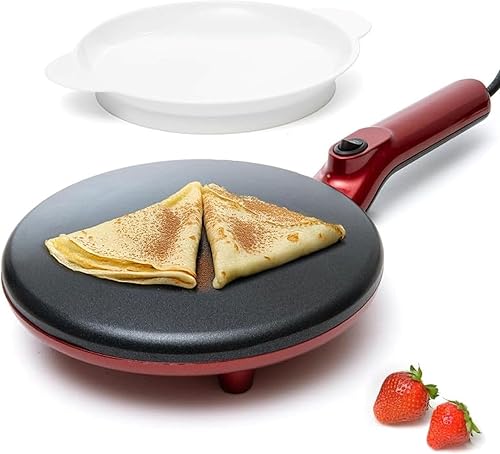
An electric crepe maker has a built-in heating element under a flat non-stick plate. You plug it in, wait a few minutes for it to reach temperature, then pour batter directly onto the surface. The Severin CM 2198, for example, draws 1,000 watts and reaches cooking temperature without any external heat source. A stovetop crepe pan is just a low-sided skillet made of aluminum or cast iron, placed over a gas or electric burner. Your stove controls all the heat, so results depend heavily on how well you know your burner. Neither type produces a better crepe by default, but they demand very different skill sets.
Temperature Consistency
Electric models hold a set surface temperature once they warm up, which means you get repeatable results from the first crepe to the last. The SCS Direct model at 1,200 watts heats up quickly and stays there. Stovetop pans heat unevenly on most home burners, and the temperature drifts up and down as you pour cold batter in and remove cooked crepes. Experienced cooks manage this by lifting and tilting the pan, but beginners end up with the first crepe too thick and the last one too dark. If consistency matters to you, the electric option has a clear edge.
Footprint, Weight, and Storage
Stovetop pans store in a cabinet like any other skillet, which makes them easy to tuck away. Electric crepe makers are flat but still require counter or cabinet space, plus a cord. The Moss and Stone OZJONG measures 9 by 16 inches and weighs 2 pounds, roughly the same footprint as a large dinner plate. The Salton RC2104BK is a bit heavier at 2.8 pounds. The Starfrit model is the lightest option in this category at under 1 pound, and at 300 watts it is sized for lighter use. If your kitchen is small and you only make crepes a few times a year, a stovetop pan takes up less dedicated space.
Price Range and Value
Stovetop crepe pans with an aluminum surface can be found for under twenty dollars, making them accessible for occasional use. Electric models range from about $18 for the Starfrit up to $80 for the Severin and well over $400 for commercial-grade units like the Waring WSC160X, which is built for high-volume foodservice. Mid-range electric models like the SCS Direct at $40 or the Moss and Stone at $30 offer a good balance of price and features for home use. The Eurolux EL-1100 at roughly $30 and an aluminum construction is a straightforward stovetop-style option. Paying more generally gets you a larger cooking surface, faster heat-up, or a heavier plate that holds heat better between pours.
Cleanup and Non-Stick Surface
Most electric crepe makers ship with a non-stick coating that releases crepes cleanly and wipes down with a damp cloth. The Severin CM 2198 uses a plastic and non-stick material combination that earns praise in its 7,000-plus reviews for easy cleanup. Stovetop aluminum pans like the Eurolux EL-1100 and Salton RC2104BK also have non-stick surfaces, but they scratch more easily if you use metal tools. Neither type is dishwasher-safe in most cases, so check the manual before submerging anything. A light coat of butter or neutral oil before the first pour helps on both types.
Who Should Buy Each Type
Choose an electric crepe maker if you want repeatable results, cook for a group, or are newer to crepe-making. The plug-in design removes one variable from the process and lets you focus on batter consistency and spreading technique. Choose a stovetop pan if you already cook confidently on your range, want a tool that stores flat with your other pans, and make crepes infrequently enough that a dedicated appliance feels like overkill. Apartment cooks with limited outlets may also lean toward the stovetop route. Questions? Email hello@chpizza.com.
Common mistakes to avoid
- Skipping the warm-up period on electric models. Pour batter before the plate is fully hot and your first crepe sticks and tears.
- Setting the heat too high on a stovetop pan. Crepes are thin and cook fast. A medium burner setting is almost always enough.
- Using too much batter per pour. A two to three tablespoon pour is standard for a thin, even crepe on most home-size plates.
- Flipping too early. Wait until the edges look dry and slightly curled before you try to turn the crepe.
- Washing a non-stick surface with abrasive scrubbers. Use a soft cloth or sponge to protect the coating and extend the life of the pan.
- Ignoring voltage requirements. The Severin CM 2198 runs on 240 volts, which is a European standard. Using it on a standard US 120-volt outlet without an adapter will damage the unit.
Frequently asked questions
Can I use an electric crepe maker on a gas stove?
No. Electric crepe makers plug into a wall outlet and have their own heating element. They are not designed to sit on a burner. If you want to use a gas stove, you need a stovetop crepe pan.
Are stovetop crepe pans dishwasher safe?
Most are not. Aluminum and non-stick surfaces degrade in the dishwasher over time. Hand-wash with warm soapy water and a soft cloth to preserve the coating.
What wattage do I need for a home electric crepe maker?
Most home models fall between 800 and 1,200 watts. The Moss and Stone OZJONG runs at 800 watts and handles light use well. The SCS Direct model at 1,200 watts heats faster and recovers more quickly between pours, which helps when making a large batch.
Can I make pancakes or omelets on a crepe maker?
Yes, within limits. The flat, low-sided plate works for thin pancakes and simple omelets. You lose the high sides of a skillet, so flipping anything thick or fluid can be tricky. Stick to flat, thin preparations.
Is a 240-volt crepe maker usable in the United States?
Not without a step-up voltage converter. Standard US outlets run at 120 volts. A 240-volt model like the Severin CM 2198 requires either a converter or a dedicated 240-volt outlet. Check the voltage spec on the product label before buying.