How to Choose a Crepe Maker
Recommended picks

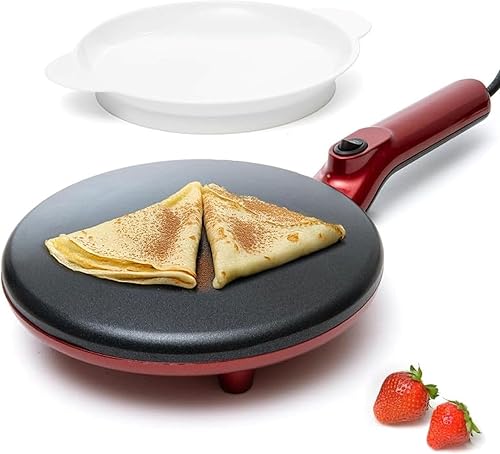

Electric vs. Stovetop
Electric crepe makers plug into a standard outlet and hold a consistent temperature without any guesswork. Stovetop pans give you more control over flame intensity but require an already-hot burner and some practice to keep the heat steady. For most households, an electric model is the simpler starting point because you just set it and pour. If you already own a well-seasoned cast-iron or carbon-steel pan and cook on gas, stovetop can produce equally thin crepes once you get the hang of it. Budget electric options like the Moss and Stone OZJONG at $29.99 or the Starfrit at $17.79 make the electric route very affordable.
Wattage and Heat Recovery
Wattage tells you how quickly a plate reaches cooking temperature and how fast it bounces back after you pour cold batter. The Severin CM 2198 runs at 1,000 W, the SCS Direct model at 1,200 W, and the Moss and Stone OZJONG at 800 W. Higher wattage generally means shorter preheat time and faster crepe-to-crepe rhythm, which matters if you are making a big batch for a family breakfast. The Starfrit sits at only 300 W, which is fine for one or two crepes but will feel slow if you are feeding a crowd. Match wattage to your typical batch size rather than just buying the highest number.
Plate Size and Surface Material
A larger plate lets you make restaurant-style crepes that fold into quarters or wrap around fillings without tearing. The Moss and Stone OZJONG measures roughly 9 inches across the cooking surface, a common size that suits both sweet and savory recipes. Non-stick coatings, as found on the Severin CM 2198 with its plastic and non-stick build, release crepes cleanly with very little butter or oil. Aluminum plates, used by the Eurolux EL-1100 and the Salton RC2104BK, conduct heat evenly and are easy to wipe down. Avoid any surface that has visible scratches or peeling, since damaged coatings affect release and can shed flakes into food.
Weight and Countertop Footprint
Crepe makers range from under one pound to nearly three pounds in the consumer segment. The Starfrit is the lightest at 0.93 lb, which makes it easy to store in a cabinet between uses. The Salton RC2104BK is heavier at 2.8 lb and measures 9.2 by 8.2 inches at its base, so it takes up meaningful counter space. If your kitchen storage is tight, check the folded dimensions before buying. The Moss and Stone OZJONG at 2.0 lb sits in the middle, stable enough not to slide around but light enough to move easily.
Budget and Value
Crepe makers span a wide price range in this category. The Starfrit at $17.79 is the entry point and holds a 4.1 rating across 899 reviews, showing it works for casual use. The Moss and Stone OZJONG at $29.99 and the Eurolux EL-1100 at $29.95 step up the build without a big jump in cost. The Severin CM 2198 at $80 is the most-reviewed option with 7,000 ratings and a 4.6 average, making it the safest buy for someone who wants confidence in the purchase. The Waring WSC160X at $427 is a commercial-grade unit suited to small cafes or very high-volume home use. Pick the price tier that matches how often you realistically plan to make crepes.
Voltage and International Use
Most American households run on 120 V outlets, so check the voltage label before buying. The SCS Direct model, Moss and Stone OZJONG, Starfrit, and Salton all run on 120 V and plug straight into any standard US outlet. The Severin CM 2198 is rated at 240 V, which is the standard in Europe and many other countries. Using a 240 V appliance on a 120 V outlet without a proper step-up converter will result in poor performance and could damage the unit. If you are buying for use in the United States, confirm the product listing says 120 V before you check out.
Common mistakes to avoid
- Buying by plate diameter without checking wattage, then wondering why crepes cook unevenly or take too long between pours.
- Using a 240 V model like the Severin CM 2198 on a standard US 120 V outlet without a voltage converter.
- Spreading batter on a plate that has not fully preheated, which causes the crepe to stick and tear.
- Choosing the lowest-priced option without reading reviews. The Starfrit at $17.79 is fine for occasional use, but a 4.1 rating on 899 reviews tells you to set realistic expectations.
- Ignoring weight and dimensions if storage is tight. A 2.8 lb, 9-inch plate will not tuck easily into a small drawer.
- Over-buttering a non-stick surface. Non-stick and aluminum plates need very little fat, and too much can cause uneven browning.
Frequently asked questions
What wattage is best for a home crepe maker?
1,000 W to 1,200 W is the sweet spot for home use. That range preheats in a few minutes and recovers quickly between crepes. Lower wattage like 800 W still works but adds wait time when making batches.
Can I use a 240 V crepe maker in the US?
Not without a step-up voltage converter. Standard US outlets run at 120 V. A 240 V appliance plugged in directly will underperform and may be damaged. Always confirm the voltage on the product listing matches your outlet before buying.
Is a non-stick or aluminum plate easier to use?
Non-stick surfaces require the least fat and the least skill to release crepes cleanly, which makes them friendlier for beginners. Aluminum heats very evenly and is durable over time but may need a thin coat of butter to prevent sticking.
How big should the plate be for a standard crepe?
A 9-inch to 10-inch plate produces a crepe that is large enough to fold in quarters or roll around a filling without tearing. Smaller plates under 7 inches are fine for mini or breakfast crepes but limit your presentation options.
Do I need to spend a lot to get a reliable crepe maker?
Not necessarily. The Severin CM 2198 costs $80 and carries 7,000 reviews at a 4.6 rating, which is strong evidence of reliability. The Moss and Stone OZJONG at $29.99 has 1,000 reviews at 4.2 stars and suits casual home cooks well. Spend more if you plan to use it weekly or need faster heat recovery.