Vevor
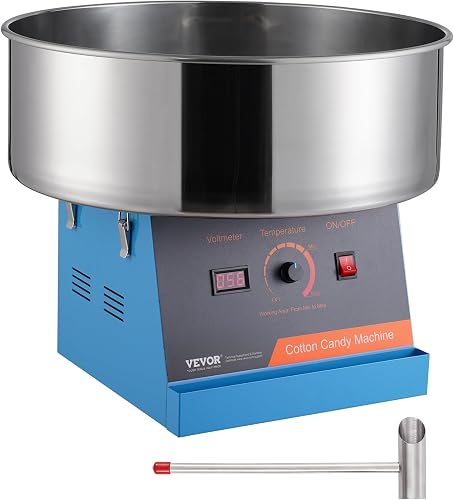
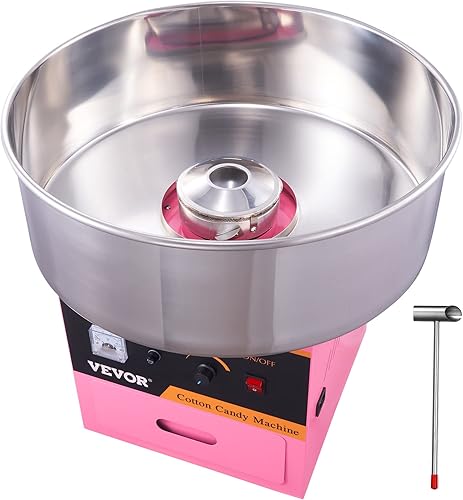
Vevor Electric Cotton Candy Machine, Cotton Candy Maker
$131.311,000+ bought last month
View on Amazon
Gather a few basic supplies so the job goes quickly: warm water, a soft sponge or microfiber cloth, a small bowl for soaking, and mild dish soap. Avoid abrasive scrub pads because they scratch the aluminum spinner head and create tiny grooves where sugar hides on the next use. A toothbrush or narrow bottle brush is useful for getting into the vents around the spinner shaft. Keep a dry towel nearby, since every removable part must be bone-dry before you plug the machine back in.
Always unplug the cotton candy maker before touching any part of it. The heating element inside the spinner head reaches high temperatures during operation, so give the machine at least five minutes to cool after you turn it off. Five minutes is usually enough for the metal to drop to a safe handling temperature, though commercial units like the Paragon 7105200 (rated 4.0 stars across 63 reviews) weigh 46 pounds and retain heat longer, so allow closer to ten minutes. Never rinse a hot spinner head under cold water, as the sudden temperature change can warp thin aluminum.
Lift the spinner head straight up off the drive shaft, then remove the floss pan or collection bowl. On most home and commercial units the spinner head simply lifts free without tools. The Olde Midway COT2000+CV22+CRT (4.3 stars, 70 reviews) uses a straightforward lift-and-twist design that many buyers call easy to manage. Set the parts on your towel. Check whether your model has a removable ribbon or floss guard around the pan rim, and detach it if so. Do not submerge the motor base or the power cord housing in water at any point.
Hold the spinner head under warm running water and let the flow dissolve loose sugar for about thirty seconds. Then apply a small drop of dish soap to a soft sponge and gently scrub the interior and exterior of the head, including the small holes where melted sugar exits. Rinse until no soap remains. For the floss pan, fill it with a few inches of warm soapy water, let it soak for two to three minutes, then wipe it clean with the sponge. Stubborn caramelized patches respond well to a five-minute soak rather than hard scrubbing. Rinse the pan thoroughly and set both pieces on the dry towel.
Dampen a cloth or sponge with warm water and wring it nearly dry before wiping the motor housing. Focus on the rim where the floss pan sits, since spun sugar drifts down and collects there during use. Use the toothbrush to clear sugar granules from any vent slots around the base. Never pour or spray water directly onto the motor housing. A second pass with a dry cloth removes any remaining moisture. For stainless steel exteriors, like those on the Paragon 7105200, a streak-free wipe-down with a dry microfiber cloth keeps the finish looking clean.
Place the spinner head and floss pan on a clean dry towel and allow them to air-dry for at least twenty minutes. You can speed this up by patting them down with a second dry cloth, but make sure no water remains in the spinner head cavity where the heating coil sits. Once every surface is dry to the touch, slide the spinner head back onto the drive shaft and set the floss pan in place. Reassembly takes under a minute on most models. Store the machine in a dry location between uses to prevent any residual moisture from causing corrosion.
Most manufacturers recommend hand washing only. Dishwasher heat and harsh detergents can corrode aluminum spinner heads and loosen any rubber gaskets on the drive shaft. Check your specific model's manual, but hand washing with warm soapy water is the safest approach for all the machines in this category.
Clean it after every use. Sugar residue left inside the spinner head burns during the next session, turning brown and affecting the flavor of the cotton candy. A quick warm-water rinse right after the machine cools takes under five minutes and prevents buildup entirely.
Soak the spinner head in a bowl of warm water for five to ten minutes. The sugar dissolves on its own without any scrubbing. After soaking, a toothbrush will clear any remaining residue from the small holes. Avoid using toothpicks or metal objects that can widen or damage the holes.
Warm water and mild dish soap are all you need for routine cleaning. A diluted white vinegar solution can help dissolve stubborn caramel stains, but rinse very thoroughly afterward because vinegar residue will affect the taste of the next batch. Baking soda is mildly abrasive, so skip it on aluminum parts.
Start with a dry brush or cloth to remove any dust or dried sugar from the spinner head and pan. Then soak both removable parts in warm soapy water for ten minutes before scrubbing. Wipe down the motor base with a barely damp cloth. Dry everything fully before running the machine. If you see any rust on metal parts, that part may need to be replaced before the next use.