The Best Pans and Trays for a Toaster Oven
The right pan makes a real difference in how evenly your food cooks in a toaster oven.
Toaster ovens are compact by design, so not every pan you own will fit inside one. A full-size baking sheet that slides easily into your regular oven will almost certainly jam or sit crooked in a toaster oven. Knowing which pans to reach for saves you from uneven browning, scorched edges from pan walls touching the heating elements, and the frustration of pulling out a tray mid-cook to rearrange things. This guide covers the most useful pan types, what materials hold up well, and a few sizing rules worth keeping in mind.
Products mentioned in this post

Measure Before You Buy Any Pan
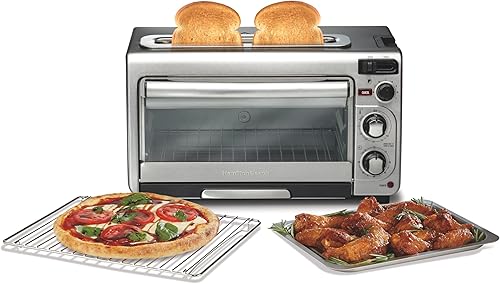
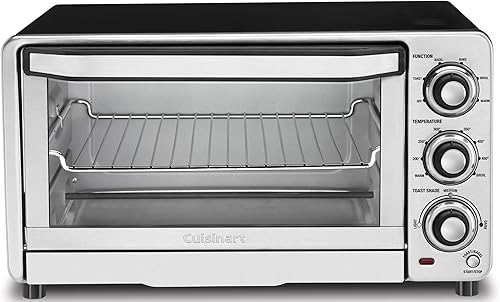
The interior of a toaster oven is smaller than it looks from the outside. Most countertop toaster ovens in the 0.5 to 0.6 cubic foot range, like the Cuisinart TOB-40NNAS (0.5 cu ft) or the Hamilton Beach 31156 (0.6 cu ft), have interior widths that top out around 12 to 13 inches. A standard quarter-sheet pan is about 9 by 13 inches, which fits most mid-size toaster ovens. A half-sheet pan at 13 by 18 inches almost never fits. Before buying a dedicated toaster oven pan, open the door and measure the interior width, depth, and the clearance from the rack to the top element. Leave at least an inch of clearance above the pan so heat can circulate. Pan walls should clear the sides by half an inch on each side to avoid blocking airflow.
Quarter-Sheet Pans Are the Most Practical Choice
A quarter-sheet pan, roughly 9 by 13 inches with a low rim of about 1 inch, is the workhorse of toaster oven cooking. The low sides allow heat to reach food from the top element without obstruction, which matters more in a small oven where the heating elements are close. Aluminum quarter-sheet pans heat up fast and cool down fast, which makes them good for cookies, vegetables, and reheating pizza. Look for pans labeled as rimmed so liquids from roasted chicken thighs or fish do not drip onto the oven floor. Some brands sell toaster oven-specific sheet pans that are slightly narrower, around 8 by 10 inches, which gives you more clearance on the sides.
What Materials Work Best
Aluminum is the most widely recommended material for toaster oven baking pans because it conducts heat evenly and resists warping at the temperatures most toaster ovens reach, typically up to 450 degrees Fahrenheit. Dark-coated non-stick pans are popular for cleanup convenience, but the dark surface absorbs more heat and can over-brown the bottoms of baked goods faster than bare aluminum. If you use a dark non-stick pan, try dropping the temperature by 25 degrees or checking doneness a few minutes early. Stainless steel pans work fine but heat less evenly than aluminum. Glass baking dishes are an option for casseroles and egg dishes, but they retain heat longer and should not be placed directly under a broiler element. Avoid using pans with plastic handles, rubber grips, or any coating that is not rated for oven use above 400 degrees.
Beyond Sheet Pans: Other Useful Shapes
A small loaf pan, around 8 by 4 inches or 4 by 8 inches, fits most mid-size and larger toaster ovens and is perfect for banana bread, meatloaf, or a small batch of brownies in a loaf format. A 6-inch or 8-inch round cake pan works for single-layer cakes or deep-dish pizza in toaster ovens with at least 0.6 cubic feet of space. Small ramekins and oven-safe ceramic dishes are useful for baked eggs or single-serve gratins. A cast iron skillet in the 6 to 8 inch size can go in most toaster ovens, though at 17 pounds or more for larger models it is heavy to maneuver in a tight space. Stick to lighter pans for daily use.
Pans to Avoid in a Toaster Oven
Full-size sheet pans and 9 by 13 inch baking dishes are designed for standard ovens and will not fit in most toaster ovens. Even if you force one in, the pan walls touching the sides block air circulation and create hot spots. Pans with tall sides, like a 3-inch deep roasting pan, sit too close to the top element in a compact oven and can scorch the tops of food before the center is done. Thin, flimsy cookie sheets can warp when exposed to the intense heat of toaster oven elements at close range. Disposable aluminum foil pans are convenient and sized right for toaster ovens, but thin foil can buckle when carrying a heavy dish out of a hot oven, so handle them carefully.
Foil and Parchment Inside a Toaster Oven
Aluminum foil can be used to line a pan inside a toaster oven, but it should never be placed loose on the oven rack or floor. A loose sheet of foil that contacts a heating element is a fire risk. Parchment paper is safe to use inside toaster ovens as long as it is trimmed to fit inside the pan with no edges sticking out past the rim, since overhanging parchment can curl toward the top element. Most parchment paper is rated to 425 or 450 degrees Fahrenheit, which aligns with the max temperature on most consumer toaster ovens. If your toaster oven reaches 500 degrees, as some Nuwave models do, check that your parchment is rated for that temperature before using it.
Frequently asked questions
Can I use a regular baking sheet in a toaster oven?
A standard half-sheet pan (13 by 18 inches) is too large for almost every toaster oven on the market. A quarter-sheet pan (9 by 13 inches) is the largest size that fits most mid-size models. Always measure your oven interior before assuming a pan will fit, and leave clearance on the sides and top.
Is aluminum or stainless steel better for toaster oven pans?
Aluminum conducts heat more evenly than stainless steel and is lighter to handle. Stainless steel pans work but can have hot spots and are slower to respond to temperature changes. For everyday toaster oven use, a light aluminum quarter-sheet pan is the most practical choice.
Can I put a glass baking dish in a toaster oven?
Oven-safe glass dishes can go in a toaster oven for dishes like casseroles or baked pasta. Do not use glass under the broil setting, since the intense direct heat from the top element can cause thermal shock and crack the glass. Tempered glass rated for oven use is safer than non-tempered, but the broil warning applies to both.
How close can a pan get to the heating element?
Most manufacturers recommend at least 1 inch of clearance between the food or pan and the top heating element. If food touches or gets very close to the element, the surface will char before the interior is cooked through. Use the lowest rack position for taller items and check clearance with the door closed before starting the oven.
Is it safe to use parchment paper in a toaster oven?
Yes, with one important caveat. Cut the parchment to fit inside the pan with no overhang. If the paper extends past the pan edges, it can curl toward the top element during cooking. Most parchment is rated to 425 to 450 degrees Fahrenheit, which covers the max temperature of most consumer toaster ovens. Check the packaging if your oven runs hotter.