Can You Put Foil in a Toaster Oven?
Yes, but only if you keep it away from the heating elements and never cover the crumb tray.
Aluminum foil is one of the most common things people want to use in a toaster oven, and for good reason. It cuts down on cleanup, keeps food from sticking, and helps hold in moisture. The short answer is that foil is fine in most toaster ovens, as long as you use it the right way. A few simple rules make the difference between a useful tool and a fire hazard.
Products mentioned in this post

Why Foil Can Be Risky in a Toaster Oven
Toaster ovens have heating elements very close to the food, much closer than in a full-size oven. If foil touches or gets near a heating element, it can arc, spark, or catch fire. The smaller interior also means foil can reflect heat in ways that cause hot spots or uneven cooking. Another common mistake is lining the crumb tray with foil. Manufacturers specifically warn against this because it blocks airflow and can trap grease close to the heating element, which is a fire risk. Always check your model's manual first, since some makers prohibit foil entirely.
When Foil Is Safe to Use
Foil works well on the baking rack when it is flat and does not extend past the edges of the pan or rack. Using it to wrap food, such as potatoes or fish, is generally fine because the foil stays in place and away from the elements. You can also line a small baking pan with foil and then set that pan on the rack. Keep foil at least an inch away from the walls and the top element. If your toaster oven has a convection fan, make sure the foil is weighed down or tucked under the food so it cannot blow up and contact the element.
What to Never Do With Foil
Never line the bottom of the toaster oven cavity with foil. This is the single most common mistake and also the most dangerous. Do not let foil hang over the edges of a rack or pan, because loose edges can curl toward the heating element during cooking. Avoid using foil in the broil setting, where the top element runs at full power and the gap between it and the food is the smallest. And do not crumple foil loosely, since a loose piece can shift around as hot air circulates.
Parchment Paper as an Alternative
Parchment paper is a reliable alternative to foil for most baking tasks in a toaster oven. It handles temperatures up to 420 to 450 degrees Fahrenheit in most cases, which covers the typical range of toaster oven settings. Parchment does not conduct electricity and will not arc near heating elements. It also releases food more easily than foil for baked goods like cookies or roasted vegetables. One thing to watch: trim parchment so it does not extend past the pan edges, since the paper can brown quickly if it is exposed to direct heat from the element.
Foil Tips for Specific Foods
For reheating pizza, a flat sheet of foil on the rack works well and gives you a crispier bottom crust than a pan would. For roasting vegetables, a foil-lined pan makes cleanup easy and the lip of the pan keeps everything contained. When cooking chicken pieces or fish, wrapping the food loosely in foil holds in steam and keeps the meat from drying out. For anything that needs a crispy exterior, skip the foil and use the bare rack or a perforated pan instead, since foil traps steam and softens the crust.
How Wattage Affects Foil Safety
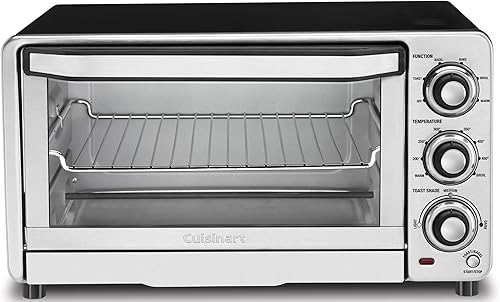
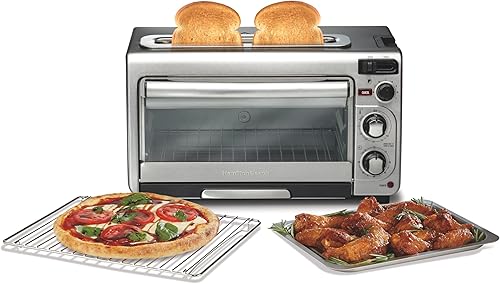
Higher-wattage toaster ovens heat up faster and run hotter elements, which makes proper foil placement more important. A 1,800-watt model like the Cuisinart TOB-40NNAS or the Hamilton Beach 31156 reaches cooking temperature quickly, so there is less margin for foil that drifts toward an element. A lower-wattage unit in the 650 to 800 watt range runs cooler elements, but the same rules still apply. Regardless of wattage, the key variable is distance from the element, not the power level of the oven.
When to Skip Foil Entirely
Some tasks do not benefit from foil at all. Toasting bread, bagels, or English muffins should always be done directly on the rack with no foil involved. The broil setting for melting cheese on a sandwich is another case where foil adds no benefit and only creates risk. If your manual says foil is not permitted, take that seriously. Manufacturers like Cuisinart and Hamilton Beach design their interior cavity shapes with specific airflow patterns, and foil can disrupt that in ways that affect both safety and cooking results.
Frequently asked questions
Can I line the bottom of my toaster oven with foil to catch drips?
No, this is the most dangerous thing you can do with foil in a toaster oven. Lining the bottom blocks airflow and holds grease or food debris directly under the heating element, which creates a fire risk. Use the crumb tray as designed and clean it regularly instead.
Is foil safe in a convection toaster oven?
It can be, but the convection fan adds a complication. Moving air can lift a loose sheet of foil and push it toward the heating element. Always secure the foil under the food or tuck it tightly to the pan edges when using convection mode.
What temperature is foil safe up to in a toaster oven?
Aluminum foil itself does not have a practical temperature limit for home cooking. The concern is not the foil melting but rather foil contacting or reflecting heat toward the heating elements. Most toaster ovens max out at 450 to 500 degrees Fahrenheit, and foil is physically fine at those temperatures when used properly.
Can I use foil to cover food in a toaster oven?
Yes, covering food with a tent of foil is one of the safer ways to use it. Make sure the tent is tall enough that the foil does not sag and touch the top heating element during cooking. This works well for keeping roasted meats from over-browning on top.
My toaster oven manual says not to use foil. Can I ignore that?
It is best not to ignore it. Some toaster ovens have interior coatings or heating element placements that make foil genuinely risky in that specific design. Following the manual protects both the appliance and your safety, and it usually keeps the warranty valid.