Toaster Oven vs Full Oven: Which Costs Less to Run?
For small meals and quick reheats, a toaster oven can cut your cooking energy cost by more than half compared to a standard full-size oven.
A full-size oven typically draws 2,000 to 5,000 watts and needs 10 to 15 minutes just to preheat. A toaster oven draws 650 to 1,800 watts and is ready in about 5 minutes. That gap matters when you cook frequently or live somewhere with high electric rates. This article puts real numbers to the difference so you can judge whether a toaster oven makes financial sense for your kitchen.
Products mentioned in this post

How Electricity Cost Is Calculated
Your electric bill charges by the kilowatt-hour, or kWh. One kilowatt-hour equals 1,000 watts running for one hour. To find the cost of any appliance, multiply its wattage by the hours of use, divide by 1,000, and multiply by your local rate. The average U.S. residential rate in 2024 was about 16 cents per kWh, though rates vary widely by state. A higher wattage appliance is not automatically expensive if you use it for short periods, but a full oven used daily adds up quickly.
Full Oven Energy Use
A standard electric oven element runs at 2,000 to 2,500 watts during active heating, and many models cycle their broil element at up to 4,000 to 5,000 watts. A typical baking session of one hour in a full oven uses roughly 2.0 kWh, costing about 32 cents at the average rate. That does not count preheat time, which can add another 0.25 to 0.5 kWh depending on oven size and target temperature. Over 30 baking sessions a month, that adds up to roughly $9.60 to $12.00 in electricity from the oven alone.
Toaster Oven Energy Use
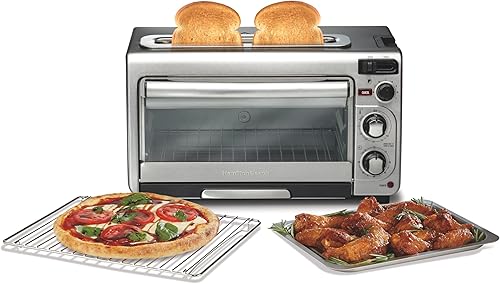
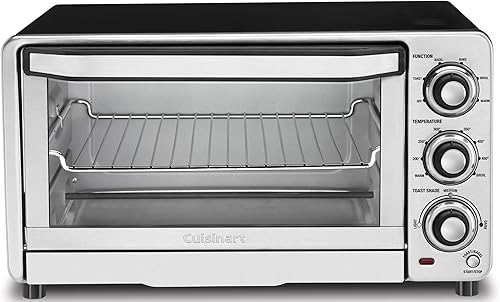
Toaster oven wattage spans a wide range depending on size. The Hamilton Beach 31344DA draws 1,200 watts, while the Hamilton Beach 31156 runs at 1,450 watts, and larger models like the Cuisinart TOB-40NNAS draw 1,800 watts. At 1,500 watts average and a one-hour bake, you use 1.5 kWh, or about 24 cents. Many toaster oven jobs take 20 to 30 minutes, bringing actual cost per session down to 8 to 12 cents. Over 30 sessions a month at that rate, you might spend $2.40 to $3.60, compared to over $9 for a full oven doing the same work.
Preheat Time Makes a Bigger Difference Than You Might Expect
Preheat is wasted energy in the sense that no food is cooking yet. A full oven heating to 375 degrees F can take 12 to 15 minutes and uses most of its top wattage the whole time. A toaster oven at the same target temperature is typically ready in 4 to 6 minutes. If you bake once a day, that preheat difference alone can cost an extra $1.50 to $3.00 per month in a full oven. For small jobs like reheating a slice of pizza, a single serving of leftovers, or a tray of cookies, the full oven preheat penalty is especially hard to justify.
When the Full Oven Still Wins
A toaster oven has a smaller interior, so it cannot replace a full oven for large roasts, multiple sheet pans, or holiday cooking. Running two or three batches in a toaster oven to equal one full-oven load can erase the energy savings. A full oven is also better for recipes that need very consistent radiant heat from all sides, such as large cakes or artisan bread loaves. If you regularly cook for more than four people, you will likely still lean on the full oven for main dishes and use the toaster oven for sides and reheating.
Gas Oven vs. Toaster Oven
If your main oven runs on gas, the comparison is less straightforward. Gas is priced per therm, not per kWh, and average gas rates make a full gas oven cheaper per BTU than an electric oven in most U.S. markets. Even so, a gas oven still takes 10 to 15 minutes to preheat, so for small jobs the toaster oven still saves time and fuel cost. The crossover point depends on your local gas price, but for single-serving meals the toaster oven is generally the faster and more economical choice regardless of your main oven's fuel type.
Practical Tips to Maximize Savings
Use the toaster oven for any meal serving one to two people. Batch small items together rather than running the toaster oven multiple times in a row. Avoid leaving the toaster oven on to stay warm after cooking, since even 200 watts over 30 minutes adds unnecessary cost. If you live in a hot climate, cooking in a toaster oven instead of the full oven also reduces air conditioning load during summer, which is a secondary but real cost benefit.
Frequently asked questions
How much does it cost to run a toaster oven for an hour?
At an average wattage of 1,500 watts and a U.S. average electric rate of about 16 cents per kWh, one hour of use costs roughly 24 cents. A lower-wattage model like a 1,200-watt unit would cost closer to 19 cents per hour. Most toaster oven tasks take 20 to 30 minutes, so real-world cost per session is usually 8 to 12 cents.
Is a toaster oven cheaper to run than a microwave?
A microwave typically draws 600 to 1,200 watts and heats food much faster, so for pure reheating a microwave usually costs less per session than a toaster oven. However, a toaster oven produces dry, crispy results that a microwave cannot match, such as re-crisping pizza crust or browning a casserole top. For baking and roasting, the toaster oven has no microwave substitute.
Does leaving a toaster oven plugged in waste electricity?
A toaster oven draws little to no standby power when turned off, so leaving it plugged in is not a meaningful cost. The energy use only occurs while the heating elements are active. Unplugging it between uses is fine if you prefer it for safety reasons, but it will not produce a noticeable change in your electric bill.
How much can I save per year by using a toaster oven instead of a full oven?
Savings depend entirely on how often you switch and your local electric rate. If you replace one full-oven session per day with a toaster oven session and save an average of 20 cents per session, that totals about $73 per year. Heavier users who bake or reheat multiple times daily could see savings of $100 to $150 per year. Your actual rate and cooking habits determine the final number.
Does oven size affect how much electricity a toaster oven uses?
Yes. Smaller toaster ovens with compact interiors like the Hamilton Beach 31344DA at 1,200 watts use noticeably less electricity than larger countertop models rated at 1,800 watts. If energy savings is a priority and you mostly make small portions, choosing a lower-wattage model with a tighter interior is worth considering. Larger models give you more cooking room but draw more power and take a bit longer to see payback versus a full oven.