Better Waffle Batter: Tips That Actually Help
A few targeted changes to how you mix and rest your batter will produce noticeably better waffles with less guesswork.
Most waffle problems trace back to the batter, not the iron. Too much stirring, skipping a rest, or using the wrong fat ratio can all produce results that are dense, soggy, or pale. The good news is that batter is easy to adjust once you know what each ingredient and step actually does. These tips focus on changes that make a measurable difference, not just kitchen folklore.
Products mentioned in this post


Stop Overmixing the Batter
Overmixing is the single most common waffle batter mistake. When you stir flour vigorously, the gluten proteins develop and create a tough, chewy texture instead of a tender crumb. Mix your wet and dry ingredients together just until no large streaks of flour remain. A few small lumps are fine and will cook out. Use a spatula or a fork rather than a whisk so you naturally apply less force. This one change alone often fixes waffles that have been coming out rubbery or gummy.
Let the Batter Rest Before Cooking
Resting batter for 5 to 10 minutes after mixing makes a real difference. During that time, the flour fully absorbs the liquid, small bubbles from the leavening start to form, and the gluten relaxes. Both effects produce a lighter, more even crumb. You do not need to refrigerate it for a short rest. If you are making batter ahead and refrigerating it overnight, take it out about 15 minutes before cooking so it comes to room temperature and the leavening can work properly when it hits the heat.
Get the Fat Ratio Right
Fat is what creates a crisp exterior on a waffle. Batter recipes that call for melted butter or neutral oil typically produce better results than recipes that rely on low-fat milk alone. Butter adds flavor, while a neutral oil like vegetable or canola can produce a slightly crispier shell because its smoking point is higher. As a starting point, around 3 to 4 tablespoons of fat per cup of flour is a reasonable range. If your waffles come out pale and soft, adding a bit more fat is usually more effective than cooking longer.
Use the Right Leavening and Check Its Freshness
Baking powder is the standard leavener for waffle batter, and it needs to be fresh to work. Old baking powder produces flat, dense waffles because it no longer releases enough gas when it meets heat. To check yours, drop a teaspoon into hot water. If it fizzes actively, it is still good. If it barely reacts, replace it before you mix your next batch. Some recipes also use a small amount of baking soda alongside baking powder, especially if the batter contains buttermilk, since the soda reacts with the acidity to add extra lift.
Separate and Whip the Egg Whites
If you want noticeably lighter waffles without changing the flavor, separate your eggs and whip the whites to soft peaks before folding them into the finished batter. The whipped whites add air that makes the interior more open and the exterior crispier. Fold them in gently after you have already combined the yolks with the other wet ingredients. This step takes a few extra minutes but produces results that differ clearly from a batter where whole eggs are added all at once. It works particularly well for Belgian-style waffles where a thicker batter is used.
Match Batter Thickness to Your Waffle Iron
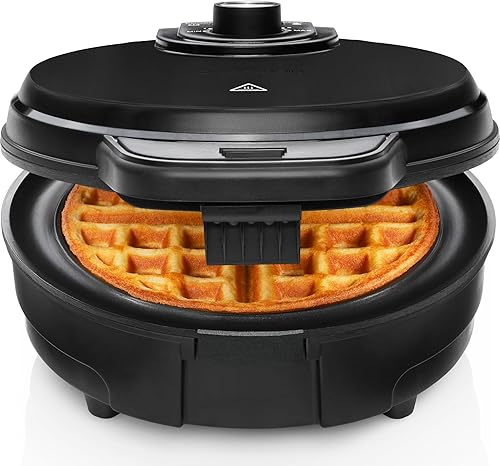
Thinner batters spread quickly and work well in shallow-grid irons, while thicker batters are better suited to deep-pocket Belgian irons. If your batter is too thick for a shallow iron, the edges may not close properly and you get uneven cooking. If it is too thin for a deep-pocket iron, you get waffles without the structure needed to hold toppings. Adjust thickness by adding a tablespoon or two of milk to thin it out, or a tablespoon of flour to thicken it. Well-rated irons like the Presto 03510 (4.6 stars across 25,000 reviews, $64.99) and the Chefman RJ04-AO-4 (4.5 stars, 12,500 reviews, $26.92) have different grid depths, so knowing your iron helps you calibrate.
Preheat Fully and Grease Consistently
Even the best batter will stick or cook unevenly if the iron is not fully preheated. Most waffle irons have a ready indicator light, but waiting an extra 30 seconds after it signals ready gives the plates a chance to stabilize at full heat. For greasing, a light spray or brush of oil or melted butter before the first waffle and every second or third waffle after that is usually enough on a nonstick surface. Too much grease can make waffles greasy rather than crispy. Irons like the Hamilton Beach 26009, rated 4.4 stars by nearly 9,800 buyers at around $39.95, have nonstick plates that need only a light application to release cleanly.
Frequently asked questions
Can I make waffle batter the night before?
Yes, most batters keep well in the refrigerator overnight. Cover the bowl tightly and give the batter a gentle stir before using. If it contains whipped egg whites, those are best folded in fresh the next morning since they lose volume as they sit. Take the batter out 10 to 15 minutes before cooking so it is not too cold when it hits the iron.
Why do my waffles come out pale even on the highest setting?
Pale waffles usually mean the batter has too little fat or too little sugar. Both contribute to browning. Try adding an extra tablespoon of melted butter or a teaspoon of sugar to your next batch. Also confirm your iron is fully preheated before you pour, since loading batter into a partially warm iron produces pale, soft results regardless of the batter formula.
Is pancake batter the same as waffle batter?
They are similar but not identical. Waffle batter typically contains more fat and sometimes more egg than pancake batter, and those differences are what produce the crispier shell a waffle iron creates. Using plain pancake batter in a waffle iron usually yields a softer, less crispy result. You can often improve pancake-based waffle batter by stirring in an extra tablespoon of oil or melted butter.
How thin should waffle batter be?
A good benchmark is batter that pours easily off a spoon but still coats it in a thin layer, similar in consistency to heavy cream. Batter that drips off instantly may be too thin and could run out of the sides of the iron. Batter that drops in clumps may be too thick and will not spread properly. Adjust with small additions of milk or flour one tablespoon at a time until it flows steadily.
Does the type of flour matter for waffles?
All-purpose flour works for most recipes and is the standard choice. Bread flour has more protein and will produce a chewier, tougher waffle. Cake flour is lower in protein and can make a more tender waffle, though the difference is subtle compared to adjustments in fat and mixing technique. If a recipe calls for all-purpose, stick with it rather than substituting unless you specifically want a different texture.