Can You Knead Dough With a Hand Mixer?
A hand mixer can handle light doughs, but knowing where the limits are saves you from a burnt-out motor and a sticky mess.
The short answer is yes, with some conditions. Hand mixers can knead soft, wet doughs like brioche, cinnamon roll dough, or pizza dough on the thinner side, but they are not built to wrestle stiff bread dough the way a stand mixer is. Most hand mixers ship with dough hook attachments for exactly this purpose, so the capability is intentional. The key is understanding what your motor can handle before you push it past its limit.
Products mentioned in this post

What the Dough Hook Attachment Actually Does
Most hand mixers come with a pair of dough hooks, which are spiral or C-shaped attachments that pull and fold the dough rather than beat it. This motion develops gluten strands, which is the same structural goal as hand kneading. The process is slower and less aggressive than a stand mixer, but it still gets the job done for softer recipes. If your hand mixer did not come with dough hooks, check the manufacturer page before assuming it cannot knead at all, since many brands sell hooks as a separate accessory.
Doughs That Work Well With a Hand Mixer
Soft, enriched doughs are the sweet spot for hand mixer kneading. These include brioche, soft dinner rolls, cinnamon roll dough, and thinner pizza dough. The higher fat and liquid content in these recipes keeps the dough pliable enough that a 150W to 275W motor can move through it without stalling. Wetter doughs for focaccia or no-knead style recipes are also manageable since there is less resistance. Start on the lowest speed and let the hooks do the work gradually rather than trying to rush the process.
Doughs That Will Strain or Break Your Motor
Stiff doughs are where hand mixers run into trouble. Bagel dough, dense whole wheat bread, and rye bread are all low-hydration recipes that put serious resistance on the motor. Running a hand mixer against this kind of dough for more than a minute or two can trigger the thermal overload cutoff on cheaper models, and repeated stress like this shortens the life of the motor. If your recipe calls for a stiff dough that barely sticks to your hands, use a stand mixer or knead by hand instead. The wattage difference matters here: a 125W motor has very little headroom compared to a 300W or 400W unit.
How to Knead Dough Without Overworking the Mixer
Use speed 1 or 2 and work in short bursts of 30 to 60 seconds with brief pauses. This lets the motor cool slightly and keeps the dough from climbing up the hooks. If the dough starts wrapping around the hooks and pulling toward the motor housing, stop immediately and scrape it back down before continuing. Keep your mixing bowl stable, either by placing a damp towel underneath or holding the rim with your free hand. For recipes that need 8 to 10 minutes of kneading, consider doing half the time with the mixer and finishing with a minute or two of hand kneading.
Wattage and Speed Count Matter More Than Brand
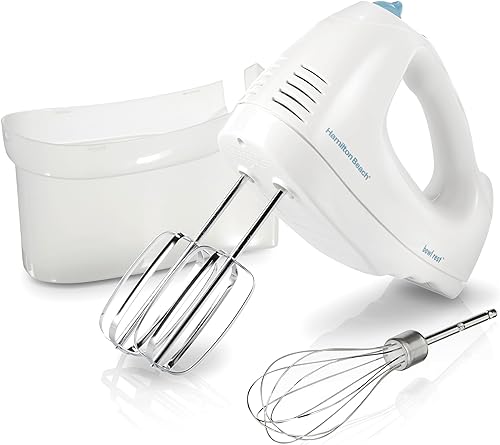
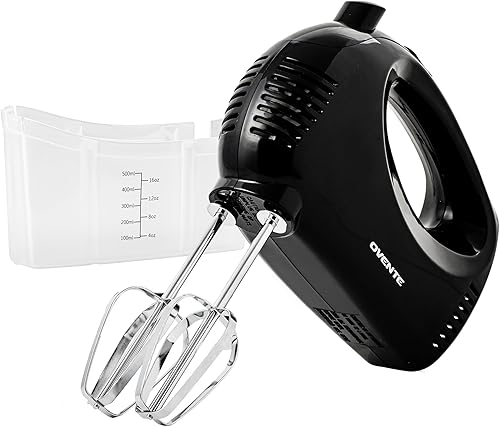
When it comes to dough, wattage and the number of speeds tell you more than the name on the side of the unit. The Hamilton Beach 62682G runs at 250W with 6 speeds and has over 66,000 reviews at 4.5 stars for around $28, making it one of the most proven budget options for light dough work. The Cuisinart HM-90BCS steps up to 220W with 9 speeds and a 3.5 qt bowl, rated 4.6 stars across 11,100 reviews at around $80, which gives you finer speed control when dough starts to stiffen. At the entry level, the Ovente HM151B offers 150W and 5 speeds for under $15 with 13,000 reviews at 4.5 stars, which is enough for very soft doughs but will struggle with anything dense.
Cleaning the Dough Hooks After Use
Dough dries fast and becomes stubborn if you let it sit. Pull the hooks out immediately after you finish and rinse them under warm water while the dough is still tacky. Most dough hooks are dishwasher safe, but hand washing takes about 10 seconds when the dough is fresh. If dough has dried onto the hooks, soak them in warm water for a few minutes before scrubbing. Never submerge the motor unit itself, and wipe down the housing with a damp cloth to catch any splatter before it hardens.
Frequently asked questions
Can I use regular beaters instead of dough hooks to knead?
No. Regular beaters are designed for batters and airy mixtures, not dough. Using them on dough will cause the dough to wrap around the beaters, can bend or break the beater arms, and puts much more stress on the motor than dough hooks do. Always use the spiral or C-shaped dough hooks when kneading.
How long should I knead dough with a hand mixer?
Most soft doughs need 5 to 8 minutes of kneading total. With a hand mixer, work in 30 to 60 second intervals rather than running it continuously. The dough is ready when it pulls away from the bowl sides cleanly and feels smooth and slightly tacky, not sticky or shaggy.
My hand mixer stopped mid-knead and smells hot. What happened?
Most hand mixers have a thermal cutoff that shuts the motor down if it overheats, which is a safety feature, not a sign of permanent damage. Unplug the mixer and let it sit for 20 to 30 minutes before trying again. If this keeps happening, the dough is too stiff for your mixer and you should finish kneading by hand or switch to a stand mixer.
Can a hand mixer replace a stand mixer for all bread recipes?
Not all of them. For soft enriched breads, sweet rolls, and wet doughs it does a reasonable job. For dense whole grain loaves, bagels, or any recipe that asks for a very tight, stiff dough, a stand mixer with a dough hook is the better tool. A hand mixer also requires you to hold it the entire time, which adds up over a 6 to 8 minute kneading session.
Is it safe to knead dough with a hand mixer that is several years old?
Age matters less than condition. If the motor sounds normal, the speed settings respond correctly, and the dough hooks are not bent or corroded, an older hand mixer should be fine for soft doughs. Avoid pushing it into stiff doughs, since older motors may have less headroom before hitting thermal limits. If the motor sounds strained at low speeds, it is time to replace the unit. Contact hello@chpizza.com if you have questions about specific models.