Hand Mixer Speed Guide for Common Tasks
Picking the right speed on a hand mixer makes a real difference in results, and it is easier to get right than most people think.
Most hand mixers sold today have 5 to 9 speeds, and there is a reason for all of them. Low speeds keep flour from flying across the kitchen and prevent cream from over-aerating too fast. High speeds build volume in egg whites and whipped cream in a fraction of the time. Knowing which setting to reach for, and when, saves you from flat cakes, grainy buttercream, and dense cookie dough. This guide maps the most common baking tasks to the speed range that works best for each one.
Products mentioned in this post
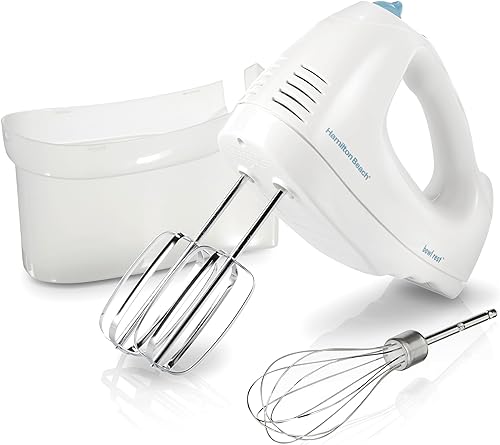

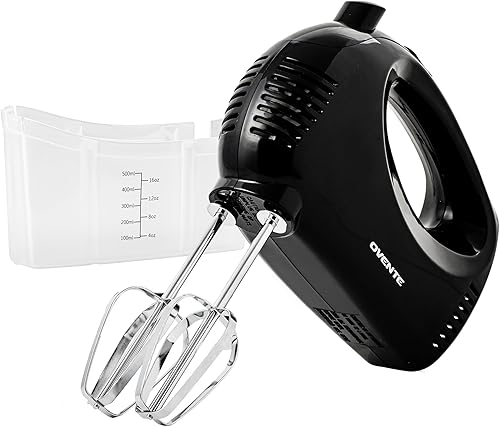
How Hand Mixer Speeds Are Usually Arranged
Most hand mixers number their speeds from 1 at the lowest to 5, 6, or 9 at the highest, depending on the model. Speed 1 is a slow stir that barely moves the beaters. Speed 3 or 4 is a medium pace good for most mixing jobs. The top speed pushes the motor as hard as it goes and is reserved for tasks that need fast, sustained aeration. A few mixers add a dedicated burst button that jumps to max speed momentarily, which is useful for breaking up lumps without leaving the mixer on high the whole time. Whatever numbering your mixer uses, think in thirds: low, medium, and high.
Speed 1 to 2: Slow Stir and Gentle Blend
The lowest speeds are for combining dry ingredients into wet ones without creating a cloud of flour. Start here when you first add flour to a cake batter or pancake mix. Speed 1 also works for folding in mix-ins like chocolate chips or nuts when you want to keep them whole rather than beat them into pieces. If you are melting butter into a warm sugar mixture, low speed prevents splashing. When a recipe says stir rather than beat, this is the range to use.
Speed 3 to 4: Medium for Most Everyday Jobs
Medium speed handles the widest range of tasks. Creaming butter and sugar together starts here and stays here for most of the process. You want the mixture to lighten in color and turn fluffy, which takes 2 to 4 minutes at medium speed. Beating whole eggs into a batter, mixing muffin batter, and blending a cheesecake filling all happen comfortably at medium. If your mixer has 6 speeds, speeds 3 and 4 cover this middle ground. If it has 5 speeds, speed 3 is the workhorse position. Do not rush to a higher speed hoping to finish faster since moving too fast can overwork the gluten in batters and produce a tough texture.
Speed 5 to 6: Medium-High for Eggs and Thick Batters
Beating egg yolks with sugar until they are pale and ribbon-like, or incorporating air into a sponge cake batter, calls for medium-high speed. This range moves the beaters fast enough to build structure in eggs without the risk of over-mixing that comes with full speed. Cookie dough and denser batters like banana bread also mix more efficiently at medium-high once the ingredients are combined, since the motor is turning fast enough to work through resistance. On a 5-speed mixer, this means pushing to speed 4 or 5. On a 9-speed mixer, speeds 5 through 7 cover the same territory.
Top Speed: Whipping Cream and Egg Whites
The highest speed on your mixer is for one main purpose: driving air into cream or egg whites as fast as possible. Heavy cream goes from liquid to soft peaks in roughly 2 minutes at full speed and to stiff peaks in about 3 to 4 minutes. Egg whites for meringue follow a similar timeline. Starting at high speed from the beginning is fine for these tasks because neither cream nor egg whites has gluten to toughen. The risk at top speed is going too long, which turns whipped cream grainy and egg whites dry and lumpy. Watch closely once you see soft peaks forming and stop the mixer often to check the texture.
When to Change Speeds Mid-Recipe
Many recipes ask you to start on low and gradually increase. This is not just about tidiness. Adding eggs one at a time on medium allows each egg to fully incorporate before the next one goes in. Creaming butter starts on low to soften the fat without warming it too much, then moves to medium once it has come together. Whipped cream benefits from starting at medium so the fat molecules begin to align before you bring it to a full boil of aeration at high. If you are following a recipe that gives specific speed instructions, trust those cues since they were developed to match the pace of emulsification and air incorporation at each stage.
Matching Speed to Wattage
A mixer with a higher wattage motor can maintain speed under load better than a lower-wattage model. A 250 W mixer will hold medium speed consistently through thick cookie dough. A 150 W mixer at the same setting may slow noticeably under that load, which effectively changes how much work the beaters are doing. If you notice your mixer struggling or the motor sound dropping in pitch, back off to a lower speed to avoid overheating. For light jobs like whipping cream or beating eggs, wattage matters less since the beaters meet little resistance.
Frequently asked questions
What speed do I use to whip heavy cream?
Start at medium to begin aerating the cream, then move to the highest speed once it starts to thicken. Soft peaks usually form within 2 minutes at full speed, and stiff peaks follow in another minute or two. Stop the mixer and check often once soft peaks appear so you do not overshoot and turn the cream grainy.
Can I use high speed to mix cookie dough faster?
It is not a good idea for most drop cookie doughs. High speed can over-develop gluten in flour-heavy batters and produce cookies that come out tough rather than tender. Medium speed works through cookie dough more slowly but produces a better texture. Save high speed for cream and egg whites, where there is no gluten to toughen.
Why does my mixer slow down when I mix thick batter?
Thick batters create resistance that loads the motor. Lower-wattage mixers of 125 W to 150 W are more prone to this than 250 W or higher models. If you notice the motor laboring, drop to the next lower speed so the beaters can still turn freely without overheating the motor. Alternately, add liquid ingredients in stages rather than all at once to reduce the load.
Is there a speed for creaming cold butter?
Cold butter is too firm to cream properly and can even damage the beaters on some models. Let butter sit at room temperature for 20 to 30 minutes first. Once it gives easily to finger pressure, start at speed 1 to break it up, then move to speed 3 or 4 to cream it with sugar until the mixture is pale and fluffy.
My mixer only has 5 speeds. How do I follow recipes that mention 9-speed settings?
Map the instructions roughly: low on a 9-speed mixer is speeds 1 to 3, which corresponds to speeds 1 to 2 on a 5-speed. Medium (4 to 6 on a 9-speed) maps to speed 3 on yours, and high (7 to 9) maps to speeds 4 and 5. The key is the relative pace, not the number itself, so use your mixer's low, medium, and high zones as the guide.