How to Get Evenly Toasted Bread
A few small adjustments to how you load, set, and maintain your toaster can turn pale-on-one-side, burnt-on-the-other results into consistently golden slices.
Most people assume uneven toast is a toaster problem. Sometimes it is, but more often it comes down to how the bread is loaded, what browning setting is selected, and whether the appliance is clean. These are all easy fixes. The tips below apply to standard 2-slice and 4-slice pop-up toasters and work with most everyday bread types.
Products mentioned in this post

Why Toast Comes Out Uneven
Toaster heating elements run along both sides of each slot. When bread sits slightly off-center, one side is closer to an element and browns faster. Crumbs blocking the bottom of a slot can also reflect heat unevenly. On 4-slot models, the two outer slots sometimes get slightly different heat than the inner pair because of how heat dissipates through the chassis. Knowing the cause points straight to the fix.
Center the Bread in the Slot
This one step fixes the majority of uneven-toast complaints. Press the bread gently against one side of the slot, then release it so it rests in the middle before you push the lever down. Wide-slot toasters give you more room to maneuver, which is useful for thick sandwich bread or sourdough. Standard slots are designed for slices around 1 inch thick or less. If your bread is noticeably thicker, check whether your toaster has a wide-slot model in the same line before forcing a tight fit.
Match the Browning Setting to the Bread
A medium setting (often labeled 3 or 4 on a 1-to-6 scale) works well for standard sandwich bread at room temperature. Fresh, soft bread toasts faster than stale bread because it has more moisture to drive off early. Dense breads like bagels or thick whole-grain loaves need a higher setting. Frozen bread needs one full step higher than you would use for fresh, not a lower setting. Starting lower than you need and pressing the lever a second time produces less even results because the elements are already warm from the first cycle.
Use the Reheat or Defrost Function When It Applies
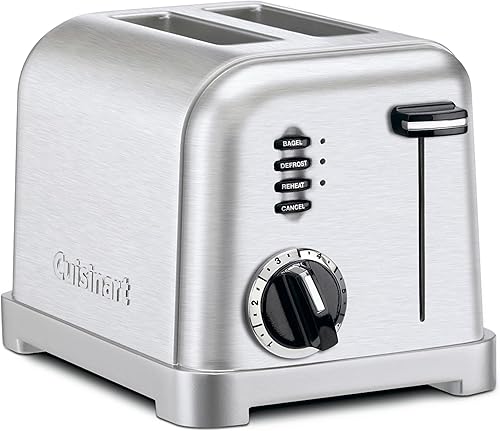
Many current toasters include dedicated reheat and defrost functions. The Cuisinart CPT-180P1, for example, is a 1800W, 4-function model with stainless steel construction that includes reheat alongside its standard browning settings. These functions adjust the cycle time rather than just heat, which gives the bread time to thaw or warm through without over-browning the outside. Using the regular toast cycle on frozen bread at a higher setting can leave the center cold while the crust darkens. If your toaster has a defrost button, use it.
Keep the Crumb Tray Clean
Accumulated crumbs in the bottom of the toaster can smolder, reflect heat unevenly, or block airflow around the lower portion of the bread. Most toasters have a removable crumb tray that slides out from the bottom. Pull it out after every few uses, tap it clean over a trash can, and wipe it with a dry cloth. Never use water inside the toaster. If your model does not have a removable tray, tip the unplugged toaster gently over a trash can and tap the base to dislodge loose crumbs.
Give the Toaster Room to Breathe
Toasters vent heat from the sides and top. Pushing one side of the toaster tight against a cabinet wall or backsplash traps heat on that side, which can cause the slice nearest the wall to toast faster. Leave at least a few inches of clearance on each side. This is also a fire safety recommendation from most manufacturers. The Cuisinart CPT-160ES, a 900W brushed stainless model, measures about 7 by 11 by 7 inches, so it fits most counters with easy room to spare when positioned away from walls.
Run a Test Slice Before a Batch
If you are toasting multiple rounds, the toaster gets progressively warmer through each cycle. Slices toasted in a hot toaster brown faster than slices toasted in a cold one, even at the same setting. For consistent results across a batch, lower the browning dial by half a step after the first round, or let the toaster cool for 60 seconds between batches. If you are making toast for a group and need all slices to come out the same, a 4-slot model lets you run two slices at once and reduce the number of total cycles.
Frequently asked questions
Why is one side of my toast always darker?
The most common cause is bread sitting closer to one heating element. Try centering the slice in the slot before pressing the lever. Also check that the toaster is not pushed tight against a wall on one side, which can trap heat.
Should I use a higher setting for frozen bread?
Yes, but a better option is the defrost function if your toaster has one. It lengthens the cycle to let the bread thaw through before browning begins. Using a high browning setting on frozen bread can over-brown the outside while the center stays cold.
How often should I clean my toaster?
Empty the crumb tray every three to five uses, or anytime you notice crumbs building up. A full crumb tray can affect browning consistency and is also a fire hazard. Wipe down the exterior with a dry or barely damp cloth as needed.
Does bread thickness affect toasting time?
Yes. Thick slices take longer to toast through and can come out pale in the middle at a normal setting. If your bread is more than about an inch thick, move the browning dial up a step, or check whether your toaster has a bagel function that boosts heat to one side only.
Why does my second batch of toast always come out darker?
The toaster is already warm from the first cycle, so it reaches toasting temperature faster. Lower the browning setting by half a step for subsequent batches, or let the toaster sit for about a minute between rounds.