How to Whip Cream With a Hand Mixer
Whipped cream comes together fast with a hand mixer, but a few simple details determine whether you get soft peaks or a greasy mess.
Whipping cream by hand is exhausting, and a stand mixer is overkill for a single cup of cream. A hand mixer is the right tool for the job, getting you from liquid to fluffy peaks in about two minutes. The process is straightforward, but cream is sensitive to temperature and mixing speed, so a little preparation makes the difference between light, stable whipped cream and a batch that weeps or turns grainy before it hits the table.
Products mentioned in this post

Start With Cold Everything
Temperature is the single most important factor in whipping cream. Heavy whipping cream must be well chilled before you start, ideally straight from the back of the refrigerator where it stays coldest. Warm cream resists forming peaks and can turn greasy quickly once it overheats from the friction of the beaters. Many home cooks also chill the mixing bowl in the freezer for 10 to 15 minutes beforehand, which helps keep the cream cold throughout the process. If your kitchen is warm, work quickly and consider setting the bowl over a larger bowl filled with ice water while you mix.
Choose the Right Beaters
Most hand mixers come with two wire whisk beaters designed exactly for this task. Use those rather than the flat beaters, which are built for thicker batters. The wire whisks incorporate air efficiently, cutting down the time needed and producing a lighter texture. If your mixer only came with flat beaters, they will still work but take longer and may produce a slightly denser result. Make sure the beaters are completely dry before attaching them, because even a small amount of water or grease in the bowl or on the beaters can prevent the cream from whipping properly.
The Right Speed at the Right Time
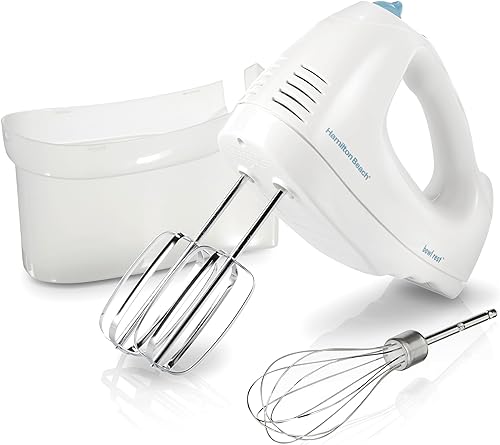
Begin on a low speed for the first 20 to 30 seconds to prevent cream from splashing out of the bowl. Once the cream starts to thicken slightly and there is less risk of splatter, increase to a medium speed, typically around speed 3 or 4 on a 5 or 6-speed hand mixer. Medium speed gives you good control and lets you monitor the texture closely. High speed is rarely needed and is more likely to lead to over-whipping, so save it for very large batches where you want to cut time. A 250-watt mixer such as the Hamilton Beach 62682G, rated 4.5 stars across over 66,000 reviews, handles a standard cup of cream on medium without any strain.
Recognizing Soft, Medium, and Stiff Peaks
Whipped cream passes through three stages as you mix. Soft peaks droop when you lift the beaters and are ideal for spooning over fruit or folding into mousse. Medium peaks hold their shape but curl at the tip, which is the most versatile stage for topping desserts and drinks. Stiff peaks stand straight up and hold firmly, which works well for piping or for cream that needs to hold its shape for several hours. Stop often and check by lifting the beater to see which stage you have reached. The window between medium and stiff peaks is narrow, so check every 15 to 20 seconds once the cream looks nearly done.
Adding Sugar and Flavorings
If you want sweetened whipped cream, add powdered sugar once the cream has begun to thicken and you can see soft peaks forming. Adding it at the start can slightly slow the process. Powdered sugar is preferred over granulated because it dissolves without leaving a gritty texture. A typical ratio is one to two tablespoons of powdered sugar per cup of heavy cream, adjusted to taste. Vanilla extract, about half a teaspoon per cup, is the most common flavoring and can be added at the same time as the sugar. Keep the mixer running on medium speed and the cream will absorb both within a few seconds.
Fixing and Avoiding Over-Whipped Cream
If you mix too long, the cream will start to look chunky, yellow, and curdled as the fat separates from the liquid. At this point you are making butter, and there is no reversing it. If you catch it early, just before full separation, you can sometimes rescue it by adding a small splash of cold heavy cream and folding gently with a spatula, then mixing briefly on low speed. The best fix is prevention: check often and stop the mixer as soon as you reach the stage you want. A mixer with more speed options, like the Cuisinart HM-90BCS with 9 speeds and rated 4.6 stars from over 11,000 reviews, gives you finer control at the medium range where over-whipping most often happens.
Storing Whipped Cream and Making It Ahead
Freshly whipped cream is best used right away, but it will hold in the refrigerator for up to 24 hours if stored in an airtight container. Expect some slight deflation and a small amount of liquid pooling at the bottom after a few hours. For cream that needs to hold longer, whip it just to medium peaks, which gives it more stability than stiff peaks. If you need very stable whipped cream for a layer cake or a filled dessert, a small amount of unflavored gelatin dissolved in warm water and mixed in while the cream is at soft peaks will help it hold its shape for up to two days.
Frequently asked questions
How long does it take to whip cream with a hand mixer?
Most batches of one to two cups of cold heavy cream reach soft peaks in about 60 to 90 seconds on medium speed, and stiff peaks in two to three minutes. Warmer cream or larger quantities will take longer. Checking every 30 seconds once the cream starts to thicken keeps you from going past the stage you want.
Can I use a low-wattage hand mixer to whip cream?
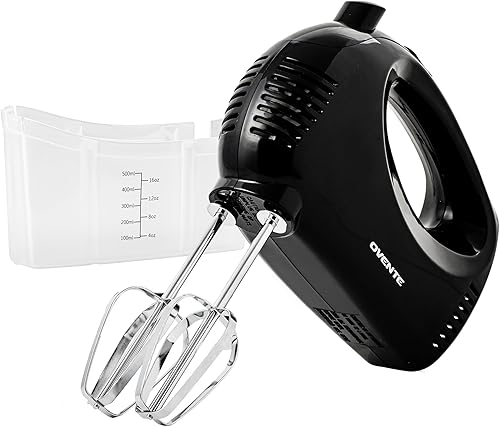
Yes. Whipping cream is not a demanding task, and even a 150-watt hand mixer such as the Ovente HM151B, rated 4.5 stars from over 13,000 reviews at around $15, handles it without trouble. A higher wattage matters more for thick cookie dough or bread dough than for cream. The main thing is that the motor runs consistently at medium speed without stuttering.
Why is my whipped cream not thickening?
The most common cause is cream that is not cold enough. Heavy cream needs to be well chilled to trap air effectively. Also check that you are using heavy whipping cream rather than light cream or half-and-half, which do not have enough fat content to whip. Grease residue in the bowl can also prevent proper aeration, so make sure the bowl and beaters are completely clean and dry.
Should I add sugar before or after whipping?
Add powdered sugar after the cream has reached soft peaks, not at the beginning. Adding sugar too early can slow down how quickly the cream aerates. Mixing it in once you already have some structure means it dissolves quickly without weighing down the cream. Two tablespoons per cup is a common starting point, but adjust to your taste.
Can I whip cream directly in the carton or does the bowl matter?
You need to use a bowl, not the carton. The bowl should be large enough so the cream can move and aerate without overflowing, typically at least double the volume of the cream you are whipping. A metal bowl chilled in the freezer beforehand is ideal because metal holds the cold temperature better than glass or plastic during mixing.