Why Does My Toast Burn on One Side?
Uneven toast is almost always a hardware or habits problem, and most fixes take less than a minute.
You set the shade dial, walk away for two minutes, and come back to toast that is dark on one side and barely golden on the other. It is a frustrating result from a simple appliance, but the cause is usually obvious once you know what to look for. Most toasters use quartz or nichrome wire heating elements, and any imbalance in those elements, in your bread placement, or in how you are using the machine will show up as uneven color. The good news is that the fixes are straightforward and do not require any tools.
Products mentioned in this post


One Heating Element Is Weaker or Failing
Inside every slot there are typically two sets of heating elements, one on each side of the bread. If one side of your toast is consistently darker, the element on the lighter side may be losing power or failing outright. You can check this by looking into the slot before you toast: when you press the lever down, both sides should glow a similar orange-red. If one side stays dark or glows noticeably dimmer, the element on that side is the culprit. On a budget toaster, a failing element usually means it is time for a replacement unit rather than a repair. On a higher-end model you may find a warranty or service option worth pursuing.
Crumb Buildup Is Blocking Heat
Crumbs that collect at the bottom of the toaster can partially block the lower heating elements and disrupt airflow inside the slot. This is especially true when one side of the crumb tray collects more debris than the other, which happens when you always load bread the same way. Pull out the crumb tray and empty it over a trash can, then wipe it clean with a dry cloth. Tip the toaster gently over a sink to dislodge anything stuck inside the slots. Doing this once a week or so keeps heat distribution more consistent and also reduces the fire risk that comes with accumulated grease.
Bread Position Matters More Than You Think
Toaster slots are sized with a center position in mind. If your bread is thinner than the slot, it can lean to one side during the cycle, pressing against one heating element and pulling away from the other. The side touching the element gets more direct radiant heat and browns faster. Try centering the bread as you lower it, or use a slightly thicker slice. With very thin sandwich bread, a brief peek partway through lets you catch the problem before one side goes too far. Wide-slot toasters tend to have this problem more than standard-slot models because there is simply more room for the bread to shift.
Using Only One Slot in a Two-Slot Toaster
Many two-slot and four-slot toasters share a single heating element between adjacent slots to reduce cost. That means one wall of each slot is a dedicated element, and the opposite wall shares heat with the neighboring slot. When you only toast in one slot, that shared wall is cooler because nothing is drawing heat from its other side. The result is one face of the bread browning faster than the other. Running both slots at once tends to even out the heat. If you routinely make a single slice, try rotating the bread 180 degrees halfway through the cycle to compensate.
Draft and Counter Position Can Play a Role
A toaster sitting directly under an air vent, next to an open window, or on a cold stone counter can develop a temperature imbalance between the two sides of its slot. Moving air pulls heat away from one side of the bread while the shielded side retains more warmth. This sounds minor, but with a cycle time of just two to three minutes even a small draft makes a visible difference. Relocate the toaster to a spot away from vents and drafts. Also keep it a few inches from the wall on both sides so heat can vent evenly rather than getting trapped against one exterior panel.
When to Consider a New Toaster
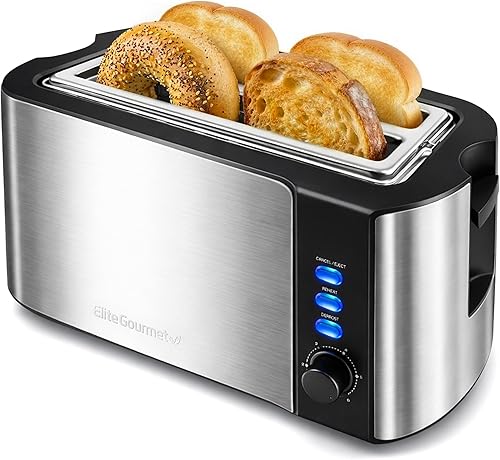
If you have cleaned the crumb tray, repositioned the bread, moved the appliance away from drafts, and still get uneven results, the heating elements are probably worn. Budget models like the Elite Gourmet ECT-3100 at $34.99 (4.3 stars across 42,000 ratings, 1,300 W) are inexpensive enough to replace without much guilt. The Amazon Basics KT-3680 at $22.04 (4.3 stars, 41,500 ratings, 900 W) gives a clean baseline for comparing whether your old unit is performing normally. For more consistent power delivery, the Cuisinart CPT-180P1 at $59.95 runs 1,800 W and has earned 4.3 stars from over 27,500 buyers, suggesting its elements hold up well over time.
Quick Habits That Reduce Uneven Toasting
A few small habits make a real difference over the long run. Always center bread in the slot rather than dropping it in casually. Keep the shade setting at medium and run a second short pass if you want darker results, rather than cranking the timer to maximum. Empty the crumb tray after every few uses. Let the toaster cool fully between batches if you are making several rounds, because residual heat from a previous cycle can make the second batch brown unevenly on one side. These small steps cost nothing and extend the useful life of almost any toaster.
Frequently asked questions
Is it normal for toast to be darker on one side?
A very slight difference between the two sides is common on many toasters, especially budget models with lower wattage elements. A dramatic difference where one side is nearly burnt and the other is barely golden is not normal and points to a failing element, crumb blockage, or bread that is not centered in the slot.
Can I fix a toaster with a failing heating element myself?
Replacing a heating element in a consumer toaster is rarely practical. The parts are hard to source and the disassembly involves sharp internal components and live wiring. For a toaster under about $50, buying a replacement unit is the safer and more cost-effective choice.
Does toaster wattage affect how evenly bread toasts?
Higher wattage generally means the elements reach and hold an even temperature more consistently, especially when toasting back-to-back batches. A 700-watt toaster may struggle to recover heat between rounds, causing uneven results on the second or third batch. Models in the 1,300 to 1,800 watt range tend to produce more consistent color across the bread surface.
Why does my bread always burn on the side closest to the wall?
That side is likely getting trapped heat radiating off the exterior panel, which reflects back into the slot. Give the toaster at least three to four inches of clearance from the wall and any nearby cabinets. This allows the outer panels to vent heat normally instead of building up temperature on one side.
How often should I clean my toaster to prevent uneven toasting?
Emptying the crumb tray once a week is a reasonable target for a household that toasts bread daily. If you use the toaster less often, cleaning it every two weeks is fine. Tip the toaster over a sink or trash can to clear anything lodged in the slots at the same time. Always do this when the appliance is cool and unplugged.