How to Choose a Cupcake Maker
Recommended picks

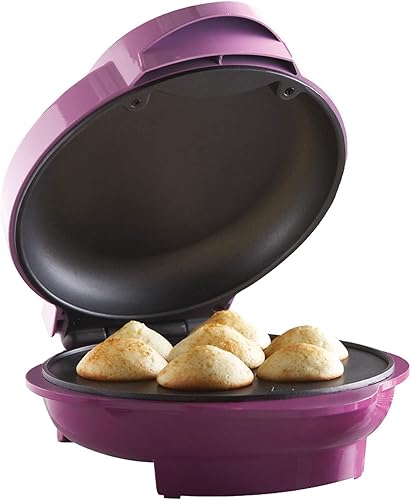

Wattage: The Most Important Spec
Wattage controls how quickly the plates heat up and how well the unit recovers after you open it and load a new batch. In this category, wattage runs from 1,000 W on the Brentwood TS-252 to 1,440 W on the Holstein Housewares model. A 1,000 W unit is perfectly capable for occasional baking, but expect slightly longer preheat times. If you plan to knock out batch after batch for a birthday party or bake sale, stepping up to 1,200 W or 1,440 W keeps the plates consistently hot and cuts waiting time between rounds.
Size and Weight
Cupcake makers are countertop appliances, so footprint and storage weight matter more than people expect. The Brentwood TS-252 weighs just 3 lb and measures about 10.2 by 11.8 by 5.9 inches, making it easy to tuck into a cabinet. The Babycakes CC-12 is larger at 13 by 13.5 by 5.5 inches and weighs 7.6 lb, which is still manageable but takes up noticeably more shelf space. Pick a lighter, more compact unit if cabinet space is tight, and go bigger only if you need the capacity that comes with the larger footprint.
Price and Value
This category spans a wide price range. The Brentwood TS-252 comes in around $25, making it one of the lowest entry points for a dedicated cupcake maker. Mid-range options like the Betty Crocker BC-2930CRT and Disney DMG-7 land in the $30 to $40 range. At the higher end, the Babycakes CC-2828PK runs about $88 and the Holstein Housewares model around $77. Higher price does not automatically mean better cupcakes. The Brentwood earns a 4.6-star rating across 644 reviews, which is nearly identical to pricier options. Spend more only if the extra wattage or brand features are genuinely useful to you.
Voltage: A Detail That Can Ruin Your Day
Most cupcake makers sold in the U.S. run on standard 120-volt household current, and the majority of options here are 120 V. The Babycakes CC-2828PK, however, is rated at 220 volts. Plugging a 220 V appliance into a standard U.S. 120 V outlet will not work correctly. If you are buying in the U.S. or Canada, confirm the voltage is 120 V before purchasing. If you are outside North America, 220 V models may be exactly what you need. Always check this spec before checkout, not after the box arrives.
Ratings and Review Counts as Confidence Signals
A star rating is only meaningful when enough people have reviewed the product to make it statistically reliable. The Holstein Housewares model has the highest review count in this category at roughly 3,500 ratings and a 4.5-star average, which gives strong confidence in that score. The Disney DMG-7 sits at 4.6 stars from about 1,800 reviews, and the Babycakes CC-12 earns 4.7 stars from 1,400 reviews. Contrast that with the Babycakes CC-2828PK at just 118 reviews, where a few unhappy buyers can swing the average significantly. When two products have similar ratings, the one with more reviews is the safer bet.
Material and Build
Most cupcake makers in this category use plastic housings, which keeps weight low and price down. The Holstein Housewares model stands out by using stainless steel, which is more durable and generally easier to wipe clean. Plastic bodies are fine for lighter use, but stainless holds up better over many baking sessions. Regardless of material, always check whether the baking plates or inserts are non-stick and whether they are removable for washing, since stuck-on batter is the number-one complaint across all countertop baking appliances.
Common mistakes to avoid
- Buying a 220 V model without checking voltage compatibility for a U.S. kitchen.
- Assuming the most expensive unit bakes the best cupcakes. The $25 Brentwood earns 4.6 stars, on par with units costing three times as much.
- Ignoring weight when shopping. A 7.6 lb appliance stored overhead can be a real hassle to pull down daily.
- Trusting a high star rating with fewer than 200 reviews. A small review pool can be skewed by a handful of outlier scores.
- Overlooking cleanup. If the baking plates are not removable or non-stick, cleanup after every batch becomes a chore that leads to the appliance sitting unused.
- Choosing low wattage for frequent use. At 1,000 W, recovery time between batches slows down; casual bakers will not notice, but party bakers will.
Frequently asked questions
How long does a cupcake maker take to preheat?
Most countertop cupcake makers preheat in about 3 to 5 minutes. Higher-wattage models, such as those at 1,200 W to 1,440 W, tend to reach temperature faster than 1,000 W units.
Can I use regular boxed cupcake mix in a cupcake maker?
Yes. Standard boxed cake and cupcake mixes work well in dedicated cupcake makers. Follow the fill level guidance in your product manual, since overfilling is the most common cause of batter spilling onto the heating element.
Are cupcake makers easy to clean?
Cleanup ease depends on the plate material and whether the inserts are removable. Non-stick plates wipe down quickly with a damp cloth once the unit cools. Stainless steel units like the Holstein Housewares model are generally durable and easy to wipe. Avoid submerging the main unit in water regardless of material.
Is a cupcake maker worth it if I already have a regular oven?
It depends on your habits. A cupcake maker heats up much faster than a full oven and uses less energy for a small batch. It is a convenient tool for quick batches or for baking with kids. If you regularly bake four or more dozen cupcakes at once, a full oven is more efficient.
Who should I contact with questions about this guide?
Reach out to the ChPizza editorial team at hello@chpizza.com and we will be happy to help.