Wide-Slot vs Standard Toaster: Which One Do You Actually Need?
Recommended picks

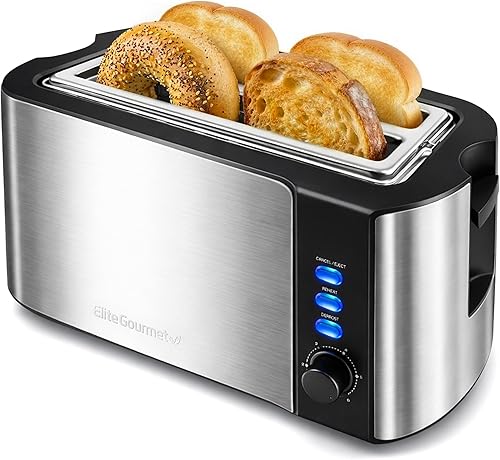

What 'Wide Slot' Actually Means in Practice
Most manufacturers define wide slots as openings that measure 1.5 inches across or wider, compared to roughly 1 inch for a standard slot. That extra half-inch sounds small but makes a real difference when you are sliding in a bakery bagel or a doorstop slice of homemade bread. The Elite Gourmet ECT-3100, rated 4.3 stars across 42,000 reviews and priced at $34.99, is a 4-slot model built wide enough to handle bagel halves without trimming. Standard-slot models like the compact Elite Gourmet ECT-1027 (750W, $15.99) are sized for pre-sliced bread and little else. The slot width is listed in the product specs or packaging, so check that number before assuming any toaster will fit what you eat.
Bread Types and Which Slot Fits Them
Pre-sliced sandwich bread, thin English muffins, and standard frozen waffles fit comfortably in a 1-inch standard slot. Bagel halves, thick-cut Texas toast, brioche slices, sourdough from a round loaf, and homemade bread typically need 1.5 inches or more. Croissants and very thick pastries may not fit either type well and are better suited to a toaster oven. If your household mixes both styles of bread, a wide-slot model handles everything a standard slot can, plus the thicker items, which is why most buyers upgrading from a broken standard toaster choose wide-slot the second time around. The Amazon Basics KT-3680, for example, is a wide-slot 2-slice model with 6 shade settings, rated 4.3 stars across 41,500 reviews at $22.04, proving you do not have to spend much to get wider openings.
Wattage, Speed, and Toast Quality
Slot width does not directly affect how fast or evenly bread toasts. Wattage does. The Cuisinart CPT-180P1 runs at 1800W and weighs 6.1 pounds, which reflects a heavier heating element capable of consistent, even browning across 4 slots. It carries 27,500 reviews and a 4.3-star rating at $59.95. Lower-wattage models like the 750W Elite Gourmet ECT-1027 take longer and may produce uneven results on thicker slices because the element has to work harder. As a general rule, look for at least 900W for a 2-slice toaster and 1200W or more for a 4-slice model if you want reasonably fast results. Both wide-slot and standard models span the full wattage range, so you are not locked into low power just because you want narrow slots or vice versa.
Size and Counter Space
Wide-slot toasters are sometimes slightly wider or longer than their standard counterparts because the chassis has to accommodate the larger opening, but the difference is not dramatic. The Amazon Basics KT-3680 measures 11 x 6.5 x 7.6 inches and weighs just 2.52 pounds, making it easy to slide into a cabinet when not in use. The Cuisinart CPT-180P1 measures 10.65 x 11.15 x 7.5 inches and is notably heavier at 6.1 pounds, a tradeoff for the more substantial build and higher wattage. If counter space is tight, compare the listed dimensions before buying. A 4-slot toaster, wide or standard, will always take up more footprint than a 2-slot model, which matters more than slot width when it comes to countertop real estate.
Price Differences Between the Two Types
Wide-slot toasters used to carry a meaningful price premium, but that gap has largely disappeared at the budget end. The Amazon Basics KT-3680 offers wide slots for $22.04, which is nearly the same as the cheapest standard-slot models on the market. The price gap opens up at the mid-range and premium tiers, where wide-slot 4-slice models with extra features like self-centering guides and motorized lift can run $60 to $100. The Cuisinart CPT-180P1 at $59.95 is an example of a wide-slot 4-slicer in that mid range with a strong track record. Budget shoppers should not assume wide-slot means spending more, but they should compare features carefully because very cheap toasters sometimes cut corners on even heating rather than slot size.
Which Type to Buy
Choose a standard slot if your household only eats pre-sliced sandwich bread and you want the smallest, cheapest option possible. Choose a wide slot if anyone in your home regularly eats bagels, thick artisan bread, brioche, or Texas toast, because forcing those into a standard slot damages the bread and wears out the lift mechanism faster. Wide-slot models handle everything standard slots can, so if you are unsure, the wide slot is the safer default. The only real reason to prefer a standard slot is size, specifically if you need the smallest possible footprint and know your bread will always fit.
Common mistakes to avoid
- Buying a standard-slot toaster without measuring a bagel half first. Many bagel halves are 1.5 inches thick or more at the cut face and will not drop into a 1-inch slot.
- Assuming all wide-slot toasters have the same opening width. Some are 1.25 inches, some 1.5 inches, and a few go wider. Check the listed slot measurement, not just the marketing label.
- Ignoring wattage when comparing models. A wide slot will not compensate for a 700W element that toasts unevenly and slowly.
- Picking a 4-slot toaster when a 2-slot fits the household. Four slots take up more counter space and the outer slots on cheap 4-slot models often toast lighter than the inner slots.
- Forcing thick bread into a standard slot and bending the heating wires. This shortens the life of the toaster and can cause uneven browning that never fully recovers.
- Overlooking the crumb tray. Wide slots collect more crumbs from artisan loaves. Make sure any model you buy has a removable crumb tray that is actually easy to pull out and clean.
Frequently asked questions
What is the standard slot width on a regular toaster?
Most standard toasters have slots that measure about 1 inch wide. That fits pre-sliced sandwich bread, thin waffles, and regular pop-tarts without any trouble. Anything thicker tends to get stuck or has to be forced in, which can damage the bread and the toaster's lift mechanism over time.
Will a wide-slot toaster toast regular bread just as well?
Yes. The wider opening does not affect how the heating elements work. Regular sandwich bread will sit lower in the slot if it is thin, but models with self-centering guides hold the bread centered between the elements for even browning. The Elite Gourmet ECT-3100, for example, handles both thin sandwich bread and thicker bagel halves across its 4 slots at $34.99.
Can I fit a whole bagel in a wide-slot toaster?
No. A toaster, wide or standard, is designed for sliced food. A whole round bagel will not fit. You need to slice the bagel in half first, then place each half cut-side down into a wide slot. Standard slots are too narrow for most bagel halves, which is the main practical reason to choose a wide-slot model.
Do wide-slot toasters use more electricity?
Slot width itself does not determine electricity use. Wattage does, and wide-slot and standard-slot models overlap heavily on wattage. The Amazon Basics KT-3680 is a wide-slot model at 900W, which is the same as many standard toasters. A 4-slice wide-slot model at 1800W will use more power per cycle than a 2-slice standard model at 800W, but that is because of the number of slots and wattage, not the slot width.
How do I know if a toaster is truly wide-slot before buying?
Look for the slot dimensions in the product specifications, not just the product name. The label 'wide slot' is not standardized and different brands apply it to openings ranging from 1.25 to 1.75 inches. If you have a specific bread type in mind, measure it at its thickest point and compare that to the listed slot width before ordering. Contact hello@chpizza.com if you need help comparing specific models.