Bread Machine vs Stand Mixer: Which One Should You Buy?
Recommended picks

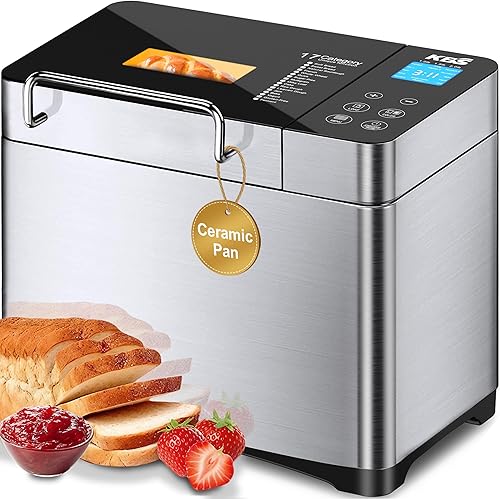

What a Bread Machine Actually Does
A bread machine mixes, kneads, proofs, and bakes the dough in one sealed chamber without any input from you after you add the ingredients. You load flour, water, yeast, and salt, select a program, and come back to a finished loaf. Machines like the Cuisinart CBK-110P1ES (4.4 stars across 16,794 reviews, $119.95, 550W, 12 programs) and the KBS MBF-010 (4.4 stars, 11,441 reviews, $129.99, 710W, 17 programs) cover standard white and wheat loaves plus jam, pasta dough, and gluten-free programs. The tradeoff is the loaf shape: bread machines bake in a tall, narrow pan with a paddle hole in the bottom, which some people find less attractive than a bakery-style oval loaf.
What a Stand Mixer Brings to Bread Baking
A stand mixer with a dough hook kneads bread dough thoroughly in about 8 to 10 minutes, which is faster and less tiring than hand kneading. After that, you still shape the dough, let it proof in a warm spot, and bake it in your own pan in the oven. That extra work gives you full control over hydration, shaping, scoring, and crust development, all things a bread machine cannot do. Stand mixers also handle cake batter, cookie dough, whipped cream, and meringue, so they earn their counter space across many more recipes than a dedicated bread machine.
Cost Comparison
Entry-level bread machines start around $100. The Amazon Basics BM1349-UL-B (4.3 stars, 7,200 reviews, 550W, 14 programs, 8 lb) sits in that range and covers the basics well. Mid-range machines like the Cuisinart and KBS models run $120 to $130 and add more program slots and higher wattage motors. A decent stand mixer for bread starts higher, often $250 to $400 for models with enough torque to handle stiff doughs. If budget is the main factor and you only want to bake bread, the bread machine wins on price. If you already own a stand mixer for other baking, you likely do not need a bread machine at all.
Ease of Use and Time Commitment
Bread machines are the lowest-effort option. A basic white loaf program typically runs 3 to 4 hours start to finish with no intermediate steps. The KBS MBF-010 at 710W kneads more aggressively than lower-wattage machines, which can improve gluten development without extra effort from you. Stand mixers require you to be present at multiple stages: mixing, shaping, two proofing periods, and active oven time. For someone baking bread twice a week, that extra involvement becomes routine. For someone squeezing bread into a busy schedule, a bread machine with a delay timer is genuinely life-changing.
Bread Quality and Variety
Bread machines produce reliable, consistent loaves that taste far better than store-bought sliced bread. What they cannot produce is artisan bread with an open crumb, blistered crust, or complex shape, because those results require high oven temperatures and steam that a bread machine chamber cannot replicate. A stand mixer opens the door to sourdough batards, baguettes, ciabatta, focaccia, and enriched doughs like brioche that need shaping skill and oven control. If you want those results, a stand mixer paired with a Dutch oven or baking stone gets you much closer.
Which One to Buy
Buy a bread machine if bread is your primary goal, you value hands-off convenience, and counter space is not a problem. The Cuisinart CBK-110P1ES at $119.95 is a proven starting point with 12 programs and 16,794 reviews behind it. Buy a stand mixer if you bake a wide variety of things, you want to develop real bread-baking skills, or you already bake cakes and cookies regularly and just want to add bread to your repertoire. If budget allows and you are serious about bread, owning both is not overkill: use the bread machine for weekday sandwich loaves and the stand mixer for weekend projects. Contact us at hello@chpizza.com with any questions.
Common mistakes to avoid
- Adding yeast and salt together without separating them in the pan, which can kill yeast activity before mixing starts.
- Using the wrong flour, all-purpose flour works but bread flour with higher protein content gives a better rise in a bread machine.
- Ignoring wattage when comparing bread machines, a 710W motor like the KBS MBF-010 kneads stiff doughs more effectively than a 450W model.
- Expecting a stand mixer alone to replicate an artisan loaf without understanding that oven technique and shaping matter just as much as kneading.
- Buying a bread machine with too few programs for your needs, then being stuck when you want to try whole wheat or gluten-free recipes.
- Leaving the paddle in the loaf after baking, it bakes into the bread and requires a hook tool to remove, often tearing the bottom crust.
Frequently asked questions
Can a bread machine replace a stand mixer for all bread recipes?
For standard sandwich-style loaves, yes. A bread machine handles mixing, kneading, proofing, and baking in one step. For shaped breads like baguettes, focaccia, or braided loaves, a bread machine cannot replicate the process because you need to shape the dough and bake it in a conventional oven to get the right crust and crumb structure.
Do bread machines make better bread than kneading by hand?
Bread machines knead consistently and for long enough to develop good gluten, which is hard to do by hand without practice. The result is reliable and repeatable. Hand kneading can produce excellent bread if you have the technique, but most beginners get more consistent results from a machine because it removes the guesswork from timing and intensity.
Is a stand mixer worth buying just for bread?
Probably not if bread is your only goal. A stand mixer costs more than an entry-level bread machine and leaves more steps for you to manage. The value of a stand mixer for bread comes from the flexibility it offers across all baking, not from bread alone. If you also make cakes, cookies, or meringues, the investment makes much more sense.
How many programs do I actually need in a bread machine?
Most home bakers use three to five programs regularly: basic white, whole wheat, dough only, and sometimes a rapid or gluten-free setting. The Cuisinart CBK-110P1ES offers 12 programs and the KBS MBF-010 offers 17, which covers nearly every situation. More programs than that rarely adds practical value for a home baker.
What if I want to bake bread without keeping a large appliance on the counter?
A stand mixer stores more easily than a bread machine for most people because it has a compact footprint and can live in a cabinet. Bread machines tend to be taller and bulkier, which makes them harder to move in and out frequently. If counter space is limited and you bake bread only occasionally, a stand mixer plus your existing oven is the more flexible setup.