How to Choose a Stand Mixer
Recommended picks


Bowl Size: Start Here
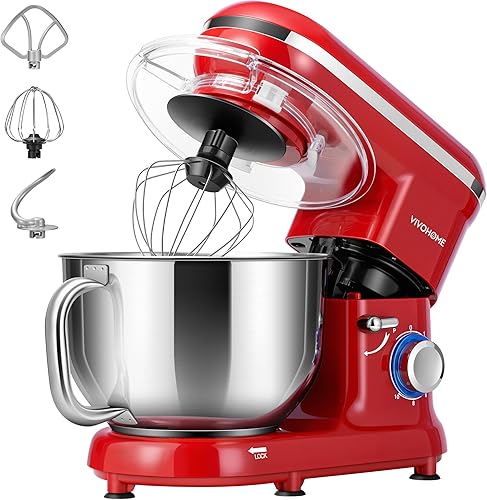
Bowl capacity determines how much you can mix in one batch without overflow. A 3.5 qt bowl, like the one on the Ovente SM680R ($59.99), is workable for single-layer cakes or a dozen cookies but runs out of room fast for bread or double batches. The Vivohome VH291-RE ($134.99) steps up to a 6 qt bowl, which handles a standard double batch of cookie dough or two loaves of bread dough without crowding. If you regularly bake for a crowd or make large bread batches, look for 6 qt or more. Occasional bakers who mostly make cakes and frostings can do fine with 4.5 to 5 qt.
Wattage: How Much Power Do You Need
Wattage tells you how hard the motor can push. Lower-wattage machines, around 250W, struggle with stiff doughs like bagels or pizza dough and can overheat if you push them. The Cusimax stand mixer ($89.98) runs 650W and handles most home tasks at its price point across 8 speeds. The Cuisinart SM-50BCC ($299.95) uses 500W with a 12-speed range and a metal body, which is enough for regular bread baking because the planetary mixing action makes efficient use of the available power. As a general rule, 500W handles most home recipes, and anything under 400W is best limited to batters and soft doughs.
Speed Range and Control
More speeds mean finer control at each stage of a recipe. Five speeds is enough for simple tasks but can make it hard to dial in the right pace for delicate jobs like whipping egg whites or slowly incorporating flour. Eight to 10 speeds covers most needs, while 12 speeds, as on the Hamilton Beach 63227 ($239.00, 4.5 qt bowl) and the Cuisinart SM-50BCC, lets you inch the speed up gradually to avoid splatter and get a better texture in finished batters. Look for a slow start feature too, which ramps up the speed instead of jumping straight to full power.
Build Quality and Weight
Heavier machines tend to stay put on the counter during heavy mixing. The Hamilton Beach 63227 weighs 21 lb and has a stainless steel body, which keeps it from creeping across the counter when working stiff dough. Lighter machines under 12 lb can walk during aggressive mixing unless you hold them. Metal housing (aluminum or die-cast zinc) is more durable than plastic over years of use. That said, some lighter machines like the Vivohome VH291-RE at 11 lb work fine for softer batters and everyday mixing where torque demands are lower.
Attachments: What Comes in the Box
Most stand mixers include three basic attachments: a flat beater for batters and frostings, a dough hook for bread, and a wire whip for cream and egg whites. Confirm all three are included before buying, as some budget models ship with fewer. Beyond the basics, check whether the mixer has a powered hub for optional add-on attachments like pasta rollers, grinders, or juicers. If you only want to mix, the standard three-piece set is all you need. If you plan to use the mixer as a kitchen workhorse, a hub with attachment support adds real long-term value.
Price and Where to Set Your Budget
Budget models under $100, like the Cusimax at $89.98 or the Vivohome VH291-RE at $134.99, are real options if you bake occasionally and stick to batters and lighter doughs. The $200 to $350 range, where machines like the Cuisinart SM-50BCC ($299.95, 500W, 12 speeds, metal body) and Hamilton Beach 63227 ($239.00) sit, gives you better motor protection, sturdier builds, and more consistent results over time. Above $400, you are mostly paying for specific brand cachet, finish options, or attachment ecosystems. Spend more only if you bake bread several times a week or need the extra attachment support.
Common mistakes to avoid
- Choosing a bowl size based on the mixer's footprint instead of actual batch volume, then finding out it is too small after the first use.
- Assuming higher wattage always means better: a well-designed 500W planetary mixer often outperforms a cheap 1000W machine with a poor gear ratio.
- Ignoring weight: a light machine will walk across the counter during stiff bread dough mixing, which is frustrating and can damage the cord.
- Skipping the attachment check and buying a machine that ships with only a beater and dough hook but no wire whip.
- Buying a 3.5 qt bowl for a household that bakes double batches, expecting to mix in two rounds, then realizing the dough overflows partway through.
- Overpaying for color or finish when the underlying motor and bowl specs are identical to a cheaper model in a less popular finish.
Frequently asked questions
What bowl size is right for most home bakers?
A 5 to 6 qt bowl covers most home baking tasks, including a standard loaf of bread, a double batch of cookies, or a two-layer cake with frosting. If you mostly bake single batches or small cakes, 4.5 qt is enough. Go up to 6 qt or more if you regularly make large bread batches or bake for a group.
How much wattage do I need for bread dough?
For regular sandwich bread, 500W is a comfortable floor. Stiffer doughs like bagels or whole-grain loaves benefit from 600W or more. Machines under 400W can handle bread occasionally but tend to run hot and may stall on dense doughs, which shortens motor life over time.
Is a 12-speed stand mixer better than an 8-speed?
More speeds give you finer control, especially at the low end where you fold in flour or slowly add liquid. Eight speeds is adequate for most tasks. Twelve speeds lets you move in smaller increments, which helps when recipes call for a specific mixing stage. The difference is noticeable but not essential for casual bakers.
Do I need a stand mixer if I already have a hand mixer?
A hand mixer works for quick jobs, but you have to hold it the entire time, which limits what you can do at the same time in the kitchen. A stand mixer frees your hands, handles heavier doughs a hand mixer cannot, and is more consistent for long mixing times. If you bake bread or large batches regularly, the difference is significant.
What should I look for in a budget stand mixer?
Prioritize bowl size (at least 4.5 qt), wattage (at least 500W), and whether all three standard attachments are included. Check that the head locks firmly in the down position, since a loose head causes uneven mixing. Read buyer reviews specifically for noise level and whether the machine heats up quickly, as those are common quality signals in the under-$150 range.