Stand Mixer vs Hand Mixer: Which One Is Right for You?
Recommended picks

What Each Mixer Actually Does Differently
A stand mixer clamps a bowl to a fixed base and drives an attachment around it while you step away, making it practical for bread doughs and thick batters that need several minutes of sustained power. A hand mixer is a handheld motor with two beater rods you move through the bowl yourself, which takes more effort but gives you control over exactly where the beaters go. Stand mixers typically run at higher sustained torque, while hand mixers rely on you to keep the beaters moving through dense material. The tradeoff is convenience versus flexibility: a stand mixer does one thing very well, and a hand mixer adapts to any bowl you own.
Power and Bowl Size
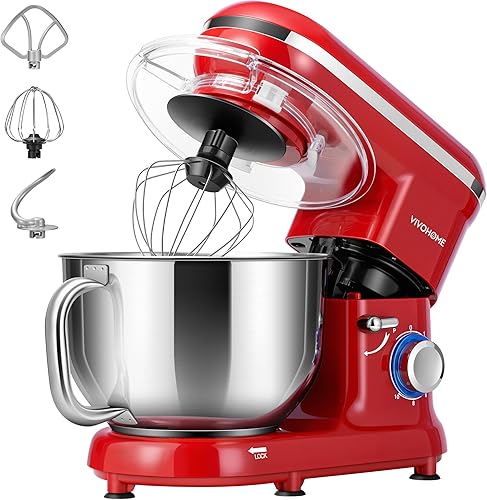
Stand mixer wattage in the consumer market commonly falls between 250 W and 660 W for home models. The Vivohome VH291-RE, for example, runs at 660 W with a 6 qt bowl, which is enough capacity for a double batch of cookie dough or a standard bread loaf. The Cuisinart SM-50BLU runs at 500 W with a 5.5 qt bowl, rated 4.7 stars across 417 reviews, and handles most home baking tasks without straining. Hand mixers typically run 200 W to 350 W, which is fine for whipped cream, frosting, and thin to medium batters but can bog down in stiff yeast doughs. If your recipes regularly call for more than 4 cups of flour at once, a stand mixer bowl of 5 qt or larger is the practical minimum.
Speed Control and Attachment Options
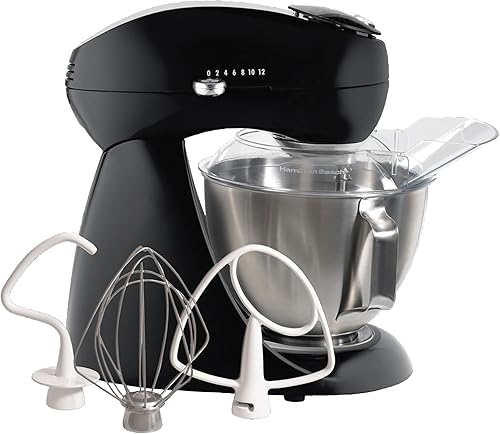
Stand mixers tend to offer more speed steps, with many home models providing 8 to 12 speeds, which lets you start slow to avoid flour clouds and then climb to full speed for whipping. The Hamilton Beach 63227 provides 12 speeds and a 4.5 qt stainless steel bowl at $239, and carries 4.5 stars from 1,700 reviews, showing it holds up well for regular home use. Stand mixers also accept specialty attachments on most brands, including dough hooks, wire whips, and flat beaters, all of which come included on most models. Hand mixers use two removable beaters and sometimes a dough hook attachment, but their narrower power range limits what those hooks can handle on the stiffest doughs.
Size, Weight, and Storage
Stand mixers are heavy countertop appliances. A typical home model weighs 11 lb to 30 lb, and commercial-style units go well above that, so most people leave them on the counter permanently. That means you need dedicated counter real estate before you buy one. Hand mixers weigh 2 lb to 3 lb on average and fit in a drawer or cabinet shelf, making them the only realistic choice for very small kitchens or for bakers who cook in more than one location. If your kitchen has limited counter space and you bake infrequently, the storage difference alone may decide the question.
Price Range
Hand mixers start well under $30 and the upper end of the home market stops around $100 to $120, so the category is consistently affordable. Stand mixers begin around $60 for entry-level compact models with modest bowl sizes and lower wattage, then climb to $200 to $400 for capable everyday models, and well above $500 for premium or commercial-grade units. The gap in typical spending is real: a solid stand mixer costs three to five times what a comparable-quality hand mixer costs. If you bake intensively, that investment pays off in time saved and better results with stiff doughs; if you bake once a month, the extra spend is hard to justify.
Which One to Buy
Choose a stand mixer if you make yeast bread regularly, bake large batches, or find yourself frustrated holding a hand mixer for five or more minutes at a stretch. Choose a hand mixer if you bake infrequently, have limited storage, are working on a tight budget, or mostly make lighter mixtures like whipped cream, muffin batter, or frosting. Many households that bake seriously eventually own both: a stand mixer for heavy weekly work and a hand mixer kept in a drawer for quick smaller tasks. If you can only buy one, match your actual baking frequency and the typical density of your recipes before deciding.
Common mistakes to avoid
- Buying a stand mixer based on looks or brand reputation without checking bowl size against the batch sizes you actually make.
- Using a hand mixer on stiff bread dough for extended periods, which can burn out the motor on budget models.
- Forgetting to measure counter height and available clearance before buying a stand mixer with a tilt-head design.
- Choosing a stand mixer with too few speeds, then struggling to start slow enough to avoid throwing flour across the counter.
- Assuming a higher wattage rating always means better performance, since motor efficiency and gear design matter as much as raw wattage.
- Buying a hand mixer to save money, then buying a stand mixer six months later anyway because the job outgrew the tool.
Frequently asked questions
Can a hand mixer handle bread dough?
Most hand mixers can manage soft bread doughs briefly if they include a dough hook attachment, but sustained kneading of stiff yeast doughs puts real strain on a handheld motor. Budget hand mixers in particular risk overheating under that load. For regular bread baking, a stand mixer with a dough hook attachment is a much safer and more reliable choice.
Is a 5 qt bowl big enough for most home baking?
A 5 qt to 5.5 qt bowl covers the large majority of standard home recipes, including a single loaf of bread, two dozen cookies, or a two-layer cake. If you routinely double recipes or bake for large gatherings, a 6 qt or larger bowl will save you from splitting batches. The Vivohome VH291-RE offers a 6 qt bowl at $134.99 if you want that extra room without a large price jump.
How many speeds do I actually need?
For most home baking, 6 to 10 speeds covers everything from a slow stir to full whipping. More speeds give finer control but the increments between steps become small enough that the practical difference is minimal. What matters more is that the lowest speed is truly slow, since starting a stiff dough at high speed is how you get ingredients on the ceiling.
Do stand mixers come with attachments included?
Most consumer stand mixers include at minimum a flat beater, a dough hook, and a wire whip. Some brands sell pasta rollers, meat grinders, and other accessories separately at additional cost. Check what comes in the box before buying if you want a specific attachment, since the included set varies between models.
Who should I contact if I have a question about this guide?
You can reach the ChPizza editorial team at hello@chpizza.com. We are happy to answer questions about specific models or help you figure out which type of mixer fits your situation.