How to Choose a Waffle Iron
Recommended picks

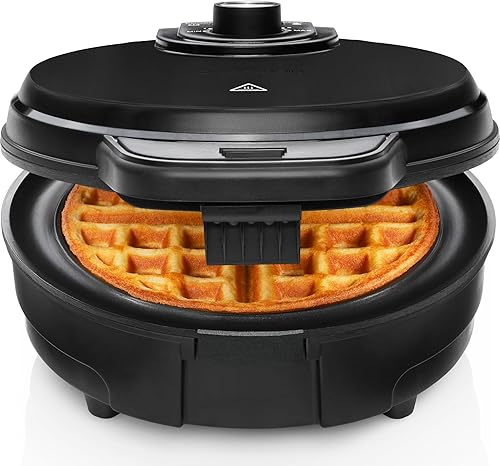

Belgian vs. Classic Waffle Style
Belgian waffle irons make thick, deep-pocket waffles, typically around 1 inch tall, that hold toppings well and have a light, airy interior when made with the right batter. Classic American irons produce thinner, crispier waffles that are better for sandwiches or eating plain with syrup. The plate pattern is set at the factory, so decide which style your household actually prefers before looking at any other spec. If you make waffles only occasionally, a classic iron at a lower price point is usually enough. Belgian irons tend to be heavier and take up more counter space, so factor storage into the decision too.
Wattage and Heat Recovery
Wattage tells you how quickly an iron heats up and, more importantly, how fast it recovers after you pour cold batter on the plates. The Presto 03510, for example, runs at 1100W and carries 4.6 stars across 25,000 reviews at $64.99, a combination that suggests the wattage is doing real work for a lot of buyers. At the lower end, the Chefman RJ04-AO-4 runs at 700W and still earns 4.5 stars from 12,500 reviewers at around $26.92, which works fine if you cook one waffle at a time and can wait 90 seconds between rounds. For family-sized batches, aim for 900W or above. Below 600W, you will notice longer waits and inconsistent browning on back-to-back waffles.
Flip vs. Non-Flip Design
A flip iron rotates 180 degrees after you pour the batter, which forces batter into every grid pocket and can produce a more evenly filled waffle. Non-flip irons rely on the weight of the top plate alone, which is perfectly adequate for most recipes, especially thinner batters. Flip models add cost, extra weight, and one more moving part that can eventually wear out. If you make Belgian waffles from scratch and fill the plates to the edge, a flip design is worth considering. If you use boxed mix or pour thinner batter, a standard flat-hinge iron saves money and counter space without any real trade-off in quality.
Plate Material and Cleanup
Nonstick coatings are by far the most common plate material in this category and make cleanup straightforward: wipe with a damp cloth after the iron cools. The Chef's Choice 8390000 uses a nonstick coating at 1050W and weighs 3.8 lb, which is manageable for everyday use. Stainless steel exteriors look clean on a countertop but the plates themselves are almost always nonstick regardless of what the exterior is made from. Cast iron plates, found on stovetop models, require seasoning and more care but hold heat exceptionally well once up to temperature. For most people, a quality nonstick plate that does not require oil or butter on the first few uses is the practical choice.
Size and Capacity
A waffle iron that makes one 7-inch round waffle is fine for one or two people. If you cook for three or more, look for a model with two separate waffle grids or a larger rectangular plate. Compact models like the Hamilton Beach 26009, which measures 7.72 x 8.66 x 4.53 inches and weighs 3.7 lb, store easily in a cabinet and are easy to pull out and put away. Larger commercial-style irons, such as the Krups 601966-GQ502YA at 9.1 lb and 1200W, produce full-size waffles faster but take up significant storage space. Match the size of the iron to how often you cook and how many people you are feeding, not to what looks impressive on a shelf.
Features Worth Paying For vs. Those That Are Not
A ready indicator light or audible beep is genuinely useful because it tells you when the iron has reached temperature before pouring and when the waffle is done. Adjustable browning controls add value if you like pale waffles for kids and darker, crispier ones for adults. A drip tray is worth having if you tend to overfill the plates. Features that add cost without proportional value include digital displays on basic models, multiple preset programs for a single-purpose appliance, and removable plates on models where the hinge does not fully open flat, making the plates harder to remove than they look in the product photos.
Common mistakes to avoid
- Choosing wattage below 700W to save money, then finding the iron takes too long to recover between waffles for family-sized batches.
- Buying a flip iron because it looks professional, then realizing a standard flat-hinge iron would have produced the same result with the batter you actually use.
- Ignoring the weight of the iron and finding a 9-plus-pound model too heavy to handle comfortably with one hand.
- Not checking whether plates are truly nonstick before the first use and adding unnecessary oil, which can bake onto the surface and degrade the coating over time.
- Selecting a model with a fixed temperature setting when your household wants both pale and dark waffles depending on who is eating.
- Overlooking the footprint and storage depth of a larger iron, then discovering it does not fit in the cabinet space you had in mind.
Frequently asked questions
What wattage do I need for a good waffle iron?
For occasional use with one waffle at a time, 700W is enough. For cooking multiple waffles back to back, 900W to 1100W is a better target because the iron recovers heat faster after each pour. Models below 600W tend to produce unevenly browned waffles when you do not wait long enough between batches.
Is a flip waffle maker worth the extra cost?
A flip design helps push batter into all the grid pockets evenly, which matters most with thick Belgian batters. For standard boxed mix or thinner batters, a flat-hinge iron produces nearly identical results. If budget is a concern, start with a flat-hinge model and only move to a flip design if you find your waffles are consistently underfilled at the edges.
How do I know when a waffle iron is ready to use?
Most modern irons include a ready indicator light that turns green or goes off when the plates have reached cooking temperature. If your iron has no indicator, a general rule is to wait 3 to 5 minutes after the iron is plugged in before pouring batter. Pouring too early leads to steaming instead of browning, and the waffle can stick even on a nonstick surface.
Can I use a waffle iron without oil or butter?
On a quality nonstick plate, you can skip oil or butter once the iron is properly seasoned from a few initial uses. Many recipes already include enough fat in the batter that additional greasing is not needed. If your iron is new, one or two lightly greased waffles at the start help condition the surface and prevent early sticking.
What is the difference between a Belgian and a classic waffle iron?
Belgian irons have deeper grid pockets, typically around 1 inch deep, and produce a thicker waffle with a fluffy interior and crispy exterior. Classic American irons have shallower grids and make a thinner, denser waffle that is crispier throughout. The choice comes down to personal taste and what you plan to put on top, since Belgian waffles hold whipped cream and fruit better while classic waffles work well with just syrup or as a sandwich base.