How to Clean a Waffle Iron: A Step-by-Step Guide
Recommended picks


What You Need Before You Start
Gather a few basic supplies: a soft damp cloth or sponge, a silicone pastry brush, a few wooden toothpicks or a wooden skewer, and a small bowl of warm water. A drop of dish soap is fine for stubborn grease. Paper towels work for a quick pass but leave more lint than a cloth, so keep a dedicated cotton rag nearby. Skip steel wool, abrasive scrubbers, and metal utensils entirely since these scratch nonstick surfaces and compromise the coating over time.
Step 1: Unplug and Cool Down
Pull the plug from the wall immediately after cooking. Leave the lid open so both plates cool evenly. Thirty minutes is usually enough for most home waffle irons, but heavier units like the Presto 03510 (4.9 lb, 1100 watts) hold heat longer, so give it a full 45 minutes before touching the plates. Never run cold water over warm plates, as sudden temperature changes can crack the nonstick surface or warp a thinner aluminum grid.
Step 2: Remove Loose Crumbs and Residue
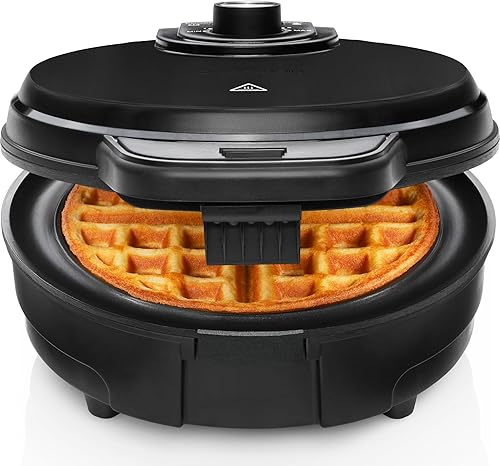
Once fully cool, hold the iron over a trash can and gently brush crumbs from the grid pockets using a dry silicone brush. For units with deep Belgian-style pockets, a wooden toothpick works well to clear corners without scratching. The Chefman RJ04-AO-4 has a compact 10x8 inch footprint, which makes it easy to tip over a sink. Lightweight models like this one (1.7 lb) can also be tilted to let loose crumbs fall straight out before any wiping begins.
Step 3: Wipe Down the Plates
Dampen a soft cloth with warm water and wring it nearly dry. Wipe each plate from the center outward, pressing gently into the grid channels. If batter is fused to a ridge, lay the damp cloth on the spot for a minute to soften it, then wipe again. For greasy residue, add one small drop of dish soap to the cloth, wipe the plate, then follow up with a clean damp cloth to remove any soap film. The Hamilton Beach 26009 (stainless steel exterior, 3.7 lb) has a drip tray on some configurations, empty and rinse that separately.
Step 4: Clean the Exterior and Hinge
Batter often drips down the sides of the lid during cooking. Wipe the exterior housing with a damp cloth, paying attention to the hinge area where overflow collects and can dry hard. Stainless steel bodies, common on models like the Presto 03510 and Hamilton Beach 26009, wipe clean easily without water spots if you follow up with a dry cloth. Avoid spraying any cleaning product directly onto the unit as liquid can seep into the heating element.
How Often to Clean Your Waffle Iron
Wipe the plates after every single use, even if they look clean. Batter residue left on the plates bakes on harder with each cook cycle, making future cleaning much more difficult. A thorough interior scrub, including the hinge and drip channels, is good practice every 4 to 6 uses. If you notice smoke during preheating, that is usually old oil buildup and a sign that a deeper clean is overdue. Consistent quick cleanups are far easier than trying to remove carbonized batter that has been cooked on multiple times.
Common mistakes to avoid
- Cleaning the iron while it is still warm or plugged in.
- Soaking or rinsing the entire unit under running water.
- Using metal spatulas or skewers that gouge the nonstick coating.
- Pouring excess batter that overflows and bakes onto the hinge, then ignoring it.
- Applying cooking spray directly to the plates before every use, which causes sticky oil buildup faster than butter does.
- Storing the iron while the plates are still damp, which can cause odors and surface degradation over time.
Frequently asked questions
Can I put waffle iron plates in the dishwasher?
Only if the manufacturer's manual explicitly says the plates are dishwasher-safe. Most fixed-plate waffle irons are not, and the high heat and harsh detergents in a dishwasher will degrade nonstick coatings quickly. Some newer models come with removable plates that are rated dishwasher-safe, so check the manual or product listing for your specific iron before trying it.
How do I remove dried, stuck-on batter?
Lay a damp cloth or paper towel over the stuck area and close the lid gently for about five minutes. The steam softens the batter so it wipes off without scrubbing. If batter is deep in the grid channels, use a wooden skewer or toothpick to loosen it first, then follow with a damp wipe. Never use a fork or metal tool, which will scratch the coating.
Is it normal for my waffle iron to smoke the first few uses?
A mild amount of smoke on the first one or two uses is common and is usually oil or protective coatings burning off from new plates. If smoke continues beyond the first couple of uses, the plates likely have oil buildup from cooking spray or excess butter. Wipe them down thoroughly with a damp cloth, let them cool, and run a plain cook cycle with no batter to burn off residue before cooking again.
Do I need to re-season my waffle iron plates?
Modern electric waffle irons with nonstick coatings do not require seasoning. Cast iron waffle irons designed for stovetop use do need periodic seasoning, just like a cast iron skillet, using a thin layer of oil wiped on and heated off. If you have an electric model with a nonstick surface, skip the oil conditioning and focus on gentle cleaning instead.
Why does batter keep sticking even after cleaning?
Sticking usually means the coating is worn, the iron was not preheated long enough, or the batter had too little fat. If the nonstick surface is visibly scratched or peeling, the iron should be replaced since damaged coatings cannot be fully restored. For a newer iron, make sure to preheat fully before pouring batter and use a recipe with enough butter or oil built in.