What Can You Cook in a Convection Oven? More Than You Think
Recommended picks


Roasted Meats and Poultry
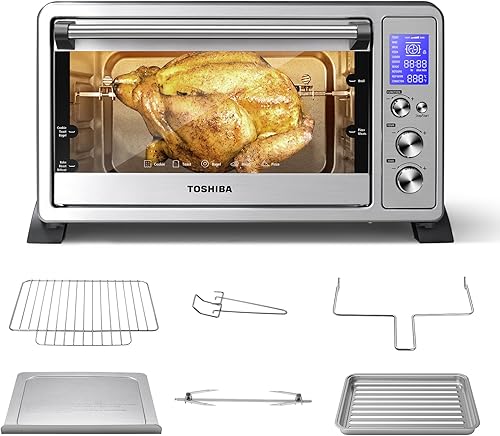
Whole chickens, pork tenderloin, beef roasts, and turkey breasts all come out with crispier skin and juicier interiors in a convection oven because the moving air pulls surface moisture away faster. A whole chicken that might take 90 minutes in a conventional oven often finishes in 60 to 70 minutes under convection heat. The Toshiba AC25CEW-SS, rated 4.4 stars across more than 13,000 reviews, tops out at 450 degrees F, which is more than enough for roasting most cuts. Keep a meat thermometer handy regardless of the oven you use, since convection timing varies by the size and starting temperature of the meat.
Vegetables and Sheet Pan Meals
Convection heat is one of the best tools for roasting vegetables because the fan helps evaporate the surface moisture that would otherwise cause steaming instead of browning. Broccoli, Brussels sprouts, carrots, potatoes, and cauliflower all come out with caramelized edges rather than the soft, pale texture a still oven can produce. Spread vegetables in a single layer and leave some space between pieces so the air can move around them. Sheet pan dinners with both a protein and vegetables work well because convection evens out the heat across the whole pan, reducing the chance of one side overcooking while the other stays underdone.
Pizza and Flatbreads
A convection oven crisps pizza crust faster and more consistently than a standard oven because the constant airflow removes steam from the cooking chamber. Homemade pizza, frozen pizza, and flatbreads all benefit from this. The Elite Gourmet ETO-4510M, which carries a 4.2-star rating from nearly 7,800 buyers and reaches 450 degrees F at 1800 watts, is a solid countertop option for pizza nights when you do not want to heat a full-size kitchen oven. Place the pizza on the lowest or middle rack depending on how crispy you want the bottom, and watch it a few minutes earlier than the package suggests because convection speeds things up.
Fish and Seafood
Fish fillets, shrimp, and scallops cook quickly to begin with, and convection makes them even faster, so timing matters more here than with other proteins. The hot circulating air produces a lightly crisp exterior on fish like salmon or tilapia without the need to pan-fry. Set the oven to a moderate temperature in the 375 to 400 degree F range and check thinner fillets after eight minutes. The Chefman RJ50-15T, rated 4.3 stars from more than 3,700 reviewers at $112.15, runs at 1750 watts and fits a practical countertop footprint for fish dishes that do not need a full-size range. Avoid covering fish with foil during convection cooking if you want any surface crisping, since the foil traps the steam the fan is working to remove.
Frozen and Reheated Foods
Frozen fries, nuggets, taquitos, and spring rolls come out noticeably crisper in a convection oven than in a microwave or standard oven because the fan aggressively drives off the surface moisture that makes frozen foods soggy. Reheating leftovers like roasted chicken, pizza slices, or roasted vegetables works well too, since the air circulation revives some of the original texture rather than just warming the food through. Use a lower temperature around 300 to 325 degrees F for reheating so the outside does not over-brown before the inside is warm, and check every five minutes until the food reaches the temperature you want.
Common mistakes to avoid
- Not reducing temperature: Most convection ovens cook 25 degrees F hotter than conventional ovens at the same dial setting, so using a standard recipe without adjusting often leads to over-browning or dry results.
- Overcrowding the pan: Piling food too close together blocks airflow and turns convection cooking into steaming, defeating the main advantage of the fan.
- Covering delicate baked goods with convection on: Moving air can cause cheesecakes and custards to crack or form an uneven skin. Turn convection off or use the conventional setting for these.
- Not checking doneness early: Because convection cooks faster, checking at the standard recipe time without starting earlier often leads to overcooked food, especially with thinner cuts of meat or fish.
- Forgetting to preheat: Convection ovens still need to preheat fully before you put food in. Putting food in a partially heated oven skews the timing and can result in uneven cooking.
- Using pans with tall sides for roasting: High-sided pans block the airflow from reaching the food. Low-rimmed sheet pans or roasting pans with a rack underneath work best for browning.
Frequently asked questions
Can I bake a cake in a convection oven?
Yes, but with some caution. Layer cakes and pound cakes bake well in a convection oven if you lower the temperature by 25 degrees F and check for doneness five to ten minutes earlier than the recipe states. Delicate cakes that rely on a slow, even rise, like angel food cake or chiffon cake, can be disrupted by the moving air, so read your recipe notes carefully and consider turning the convection fan off for those.
Does a convection oven work for frozen pizza?
It works very well. The circulating air removes the steam that makes frozen pizza crusts soggy, producing a crisper base and more evenly melted cheese than a standard oven typically delivers. Reduce the package-directed temperature by 25 degrees F and start checking the pizza two to three minutes before the stated minimum time.
Is convection better than a regular oven for roasting vegetables?
For most vegetables, yes. The fan pulls moisture off the surface faster, which is what creates those browned, caramelized edges instead of soft, steamed-looking pieces. The only scenario where a conventional oven might be preferable is when you want very tender, fully softened vegetables without any crisping, such as for a puree or soup.
How much faster does a convection oven cook compared to a regular oven?
A common rule of thumb is 25 percent faster, though the actual difference depends on the food, the pan, and how full the oven is. A chicken breast that takes 30 minutes conventionally might be done in 22 to 24 minutes under convection. Using a food thermometer is the most reliable way to confirm doneness regardless of time estimates.
Can I use aluminum foil in a convection oven?
You can use foil to line the bottom of a pan or to tent a roast toward the end of cooking to prevent over-browning. What you want to avoid is wrapping food tightly in foil during convection cooking, since that traps steam and prevents the moving air from doing its job. If you need to hold in moisture, lower the temperature instead of using foil.