Convection vs Regular Toaster Oven: What Actually Matters
Recommended picks
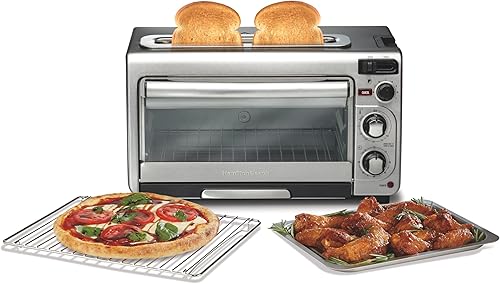
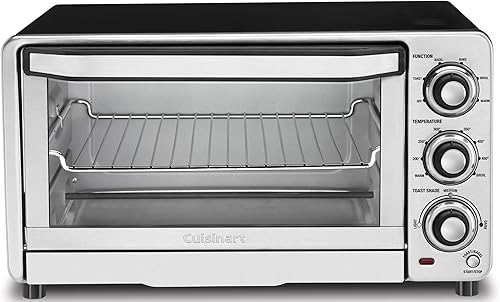

How Each Type Heats Food
A standard toaster oven relies on radiant heat from two or more heating elements, typically one on top and one on the bottom. The air inside the cavity stays mostly still, so food closer to an element browns faster than food in the center or far corner. A convection toaster oven adds a small fan, usually mounted at the back, that keeps hot air moving continuously across all surfaces of the food. That constant circulation evens out hot spots and pulls moisture away from the surface faster, which is what gives roasted vegetables and baked goods their crispier exterior. The physics are straightforward: moving air transfers heat more efficiently than still air at the same temperature.
Speed and Temperature: What the Numbers Mean
Convection cooking typically cuts time by 20 to 25 percent compared to the same recipe in a conventional oven or a standard toaster oven. In practical terms, chicken thighs that take 30 minutes in a regular toaster oven may be done in 22 to 24 minutes in a convection model set to the same temperature. Wattage drives how fast the cavity comes up to temperature, not which mode you use. For example, the Hamilton Beach 31156 draws 1,450 watts and reaches up to 450 degrees F, while the Cuisinart TOB-40NNAS draws 1,800 watts and also tops out at 450 degrees F. The higher-wattage unit preheats faster regardless of whether it has a convection fan. If you are adapting a recipe written for a full-size oven, reduce temperature by 25 degrees F or time by 20 percent when using convection, not both at once.
Which Tasks Favor Convection
Convection excels at any task where browning, crisping, or even cooking across a larger surface matters. Roasted potatoes, sheet-pan chicken, pizza, and pastries all benefit from the airflow. Cookies bake more evenly because the fan eliminates the need to rotate the pan halfway through. Dehydrating and air-frying functions found on many newer toaster ovens also depend on a convection fan to work correctly. The Emeril 4-00675-02X-VN, rated 4.4 stars across 16,800 reviews at $149.99, is one of the more popular larger-capacity convection-style toaster ovens in this price range, which reflects how much demand there is for fan-assisted cooking at the countertop level.
When a Regular Toaster Oven Is Enough
A standard toaster oven handles toast, bagels, English muffins, frozen waffles, and reheated pizza slices without any drawbacks. It also broils steak tips or a piece of fish just fine because broiling uses direct radiant heat from the top element, not airflow. If your main use cases are breakfast items and quick reheating, there is no reason to pay extra for a convection fan you will rarely use. The Hamilton Beach 31156 at $99.95 with 10,000 reviews and a 4.4-star rating is a well-regarded example of a capable standard toaster oven: 0.6 cubic feet of usable space, 1,450 watts, and a max temperature of 450 degrees F, with simple knob controls that get out of the way. For a smaller household or a secondary kitchen, that kind of straightforward design is often more reliable day to day.
Price, Wattage, and Capacity Tradeoffs
Convection toaster ovens typically cost $20 to $60 more than a comparable standard model from the same brand. That gap narrows at the higher end of the market, where most models above $150 include convection as a baseline feature. Capacity matters independently of convection mode: the Cuisinart TOB-40NNAS offers 0.5 cubic feet at $99.95, while the Hamilton Beach 31344DA offers just 0.2 cubic feet at $59.95. A smaller cavity reheats a sandwich quickly but cannot fit a 9-by-13-inch baking dish or a 12-inch pizza. Match the interior size to the largest item you plan to cook regularly before deciding which heating mode matters more. Wattage also affects energy draw, so if your kitchen circuit is already loaded, a 1,800-watt model may trip a breaker if run alongside a coffee maker or microwave.
How to Decide Between the Two
Start by listing the three or four things you will cook in this oven most often. If that list includes anything roasted, baked from scratch, or needing a crispy crust, convection will serve you better. If the list is mostly toast, frozen items, and reheated leftovers, a standard model at a lower price point covers your needs. Budget is a real constraint: spending $100 or less limits most shoppers to standard models with fewer bells and whistles. Above $130 to $150, convection becomes common enough that you should look for it as a baseline, not a premium add-on. Also consider counter space: convection fans require slightly more interior depth, so many convection toaster ovens are a few inches deeper than equivalent standard units, which matters in a tight galley kitchen.
Common mistakes to avoid
- Using the same temperature and time from a conventional oven recipe without adjusting for convection, which leads to overcooked or dried-out food.
- Buying a large-capacity convection oven when the primary use is single-slice toast, where most of the extra wattage and space goes to waste every day.
- Assuming higher wattage always means convection. A 1,800-watt standard toaster oven has no fan and will not cook like a convection model.
- Placing food directly on the rack without a pan in a convection oven, which can cause drips onto the fan and heating element and make cleanup harder.
- Skipping the preheat step because the oven is small. Toaster ovens still benefit from a 5-minute preheat, especially for baked goods where starting temperature affects rise.
- Overlooking interior dimensions when comparing models. A stated 0.6 cubic foot capacity does not tell you whether a 12-inch pizza or a standard muffin tin will fit without hitting the walls.
Frequently asked questions
Does convection cook food faster in a toaster oven?
Yes, convection typically cuts cook time by 20 to 25 percent compared to a standard toaster oven at the same temperature setting. The fan circulates hot air continuously, which transfers heat to food surfaces more efficiently than still air. To avoid overcooking, reduce either time or temperature when switching a recipe from conventional to convection, not both.
Is a convection toaster oven worth the extra cost for everyday use?
It depends on what you cook. For roasting, baking, or crisping foods regularly, the more even results and faster cook times justify the added cost. For basic toast, reheating leftovers, and occasional broiling, a standard toaster oven at a lower price handles those tasks just as well. Most people who cook varied meals four or more times a week will use the convection function often enough to make it worthwhile.
Can I use a convection toaster oven without the fan running?
Most convection toaster ovens let you select a conventional bake or broil setting that keeps the fan off, so you get both modes in one unit. This makes them more versatile than a standard oven, since you can use convection for roasting and switch to standard mode for anything that browns too quickly with airflow, such as a delicate custard or a thin piece of fish.
Will convection dry out my food?
It can, if you cook at too high a temperature or for too long. The moving air does pull surface moisture away faster, which is great for crispy skin on chicken but can make lean proteins or low-fat baked goods dry if time is not reduced. Using a covered dish or tent of foil for the first portion of cooking preserves moisture, and then removing the cover for the last few minutes lets the surface brown.
How do I contact ChPizza with a question?
You can reach the ChPizza team by email at hello@chpizza.com. We are happy to answer questions about specific models, features, or which toaster oven fits a particular cooking need.