Toaster Oven vs Microwave: Which One Actually Belongs in Your Kitchen?
Recommended picks
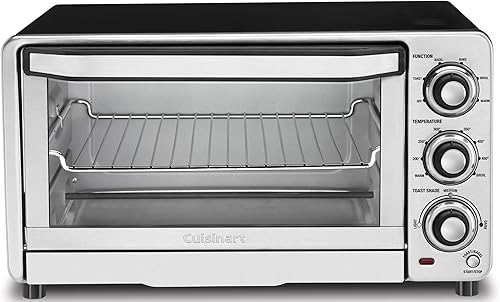
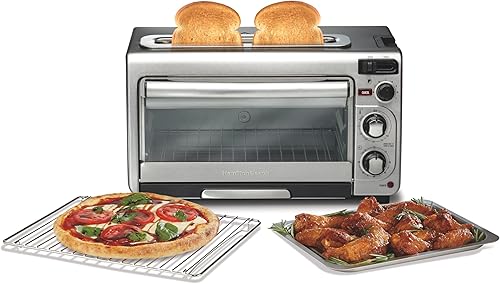

How Each Appliance Actually Heats Food
Microwaves emit microwave radiation that agitates water molecules inside food, heating it from the inside out without browning the surface. This is why a microwaved slice of pizza comes out with a limp crust even if the cheese is hot. Toaster ovens work exactly like a full-size oven: heating elements radiate heat, the air in the cavity warms up, and the surface of food browns through the Maillard reaction. Models like the Cuisinart TOB-40NNAS run at 1800 watts and reach 450 degrees F, enough heat to toast bread golden or finish a chicken breast with a real sear. The Hamilton Beach 31156, also rated at 1450 watts with a 450 degree F maximum, fits a 0.6 cubic foot cavity that handles a 12-inch pizza or six slices of toast at once. Neither appliance is universally better; they accomplish different things at the physics level.
Speed and Convenience
Microwaves heat a bowl of soup in 90 seconds and defrost a pound of ground beef in under ten minutes. Toaster ovens need 3 to 5 minutes to preheat before cooking even begins, and a full bake can take 20 to 30 minutes. If your main tasks are reheating coffee, defrosting proteins, or warming canned soup, a microwave is the faster tool by a wide margin. Where toaster ovens catch up is on tasks that require browning: reheating fries, finishing nachos, or baking a small batch of cookies. A toaster oven that needs 15 minutes to crisp leftover french fries still beats a microwave that turns them into steaming rubber in two minutes.
Food Quality and Texture
Texture is where toaster ovens have a clear structural advantage. Dry heat drives off surface moisture, which is exactly what you want for bread, pizza, pastries, roasted vegetables, and most proteins. The Emeril 4-00675-02X-VN, rated 4.4 stars across more than 16,800 reviews at $149.99, runs at 1700 watts and draws buyers specifically for its ability to crisp food the way a full oven does. Microwaves, by contrast, are ideal for foods where you want to preserve moisture: steaming vegetables, reheating rice, warming soups and stews, or softening butter. Putting crispy foods in a microwave almost always ruins their texture. Putting moist foods in a toaster oven can dry them out unless you cover them or add a small amount of water to the pan.
Counter Space and Cost
Compact toaster ovens start around $30 for basic models and go well past $300 for larger convection units. The Hamilton Beach 31156 measures about 12 by 17.8 by 10.2 inches and weighs just under 15 pounds, which is a real footprint on a countertop. Entry-level microwaves run from $60 to $120 for countertop models, and most have a larger interior volume despite similar or smaller external dimensions. If your kitchen has tight counter space, a microwave often fits more food into a smaller external box. If you bake, toast, or reheat crisped foods regularly, the extra counter real estate a toaster oven takes up is usually worth it.
What a Toaster Oven Can Do That a Microwave Cannot
Toaster ovens bake, broil, toast, and roast. They can finish a gratin with a golden top, bake a small batch of muffins, reheat leftover pizza with a crisp bottom, and broil fish fillets. A toaster oven is a genuine oven substitute for households without a full range, or for anyone who wants to avoid heating up a large wall oven for small jobs. Microwaves cannot brown food, cannot toast bread, and cannot produce a crisp crust on anything. They also cannot substitute for an oven in baking without specialized microwave-safe cookware and recipes written specifically for microwave cooking, which behave very differently from standard baking.
What a Microwave Can Do That a Toaster Oven Cannot
Microwaves defrost frozen food safely in minutes, which toaster ovens cannot do without cooking the outside before the inside thaws. They reheat liquids, soups, and sauces evenly without scorching the bottom. They pop popcorn in a dedicated bag in about three minutes. They steam vegetables with nothing more than a microwave-safe bowl and a small amount of water. For households with young children who need fast reheating, or for office kitchens where speed is everything, a microwave handles a wider range of daily tasks faster than any toaster oven can. If you rarely bake and mostly need to warm food rather than cook it, a microwave covers more ground.
Common mistakes to avoid
- Putting crispy leftovers like fries or pizza into a microwave instead of a toaster oven, which destroys the texture in under two minutes.
- Trying to defrost meat in a toaster oven, which cooks the outside while the center stays frozen.
- Buying a toaster oven that is too small for actual use. The Hamilton Beach 31156 at 0.6 cubic feet handles a 12-inch pizza; smaller 0.2 cubic foot models like the Hamilton Beach 31344DA at $59.95 fit only a couple of slices.
- Not preheating the toaster oven before placing food inside, which leads to uneven cooking and longer overall times.
- Assuming a microwave is always faster. For tasks that need dry heat, a toaster oven at 450 degrees F can finish a thin-crust pizza in 8 minutes versus a rubbery result from a microwave in 3.
- Ignoring wattage when comparing toaster ovens. A 650-watt unit takes significantly longer to reach temperature and brown food than a 1800-watt model.
Frequently asked questions
Can a toaster oven replace a microwave completely?
For most cooking tasks, no. A toaster oven cannot defrost food safely or reheat liquids quickly without scorching. It also takes 3 to 5 minutes to preheat before any cooking begins, while a microwave starts working immediately. If you mostly bake, toast, and reheat solid foods, you could live without a microwave. If you regularly defrost proteins or reheat soups, you will miss having one.
Is a toaster oven healthier than a microwave?
Neither appliance adds anything harmful to food. Microwave radiation is non-ionizing and does not make food radioactive. Toaster ovens use the same dry heat as a conventional oven. The health difference, if any, comes down to cooking method: dry heat in a toaster oven can reduce the need for added fats when crisping food, while microwave steaming retains more water-soluble nutrients in vegetables. Both are safe everyday cooking tools.
Which uses more electricity, a toaster oven or a microwave?
Most countertop microwaves pull 600 to 1200 watts and run for short bursts. Most toaster ovens run at 1200 to 1800 watts and operate for longer periods. The Cuisinart TOB-40NNAS, for example, draws 1800 watts. Because cooking times in a toaster oven are longer, the total energy per task is often similar to or slightly higher than a microwave for equivalent jobs like reheating a plate of food.
Can I bake in a toaster oven?
Yes, toaster ovens bake the same way a full oven does. Models that reach 450 degrees F handle cookies, small cakes, muffins, biscuits, and casseroles without issue. The main limits are cavity size and heat consistency. Larger units like the Cuisinart TOB-60N1CS with 0.6 cubic feet give you more usable space for baking pans. Smaller units under 0.3 cubic feet work for toast and single servings but are too cramped for baking standard recipes.
What should I do if I only have room for one appliance?
Choose based on what you cook most often. If you regularly bake, toast, roast vegetables, or reheat pizza, a toaster oven handles those tasks in a way a microwave cannot. If your main needs are defrosting, reheating soups, and speed, a microwave covers more daily ground. Contact us at hello@chpizza.com if you have questions about specific models.